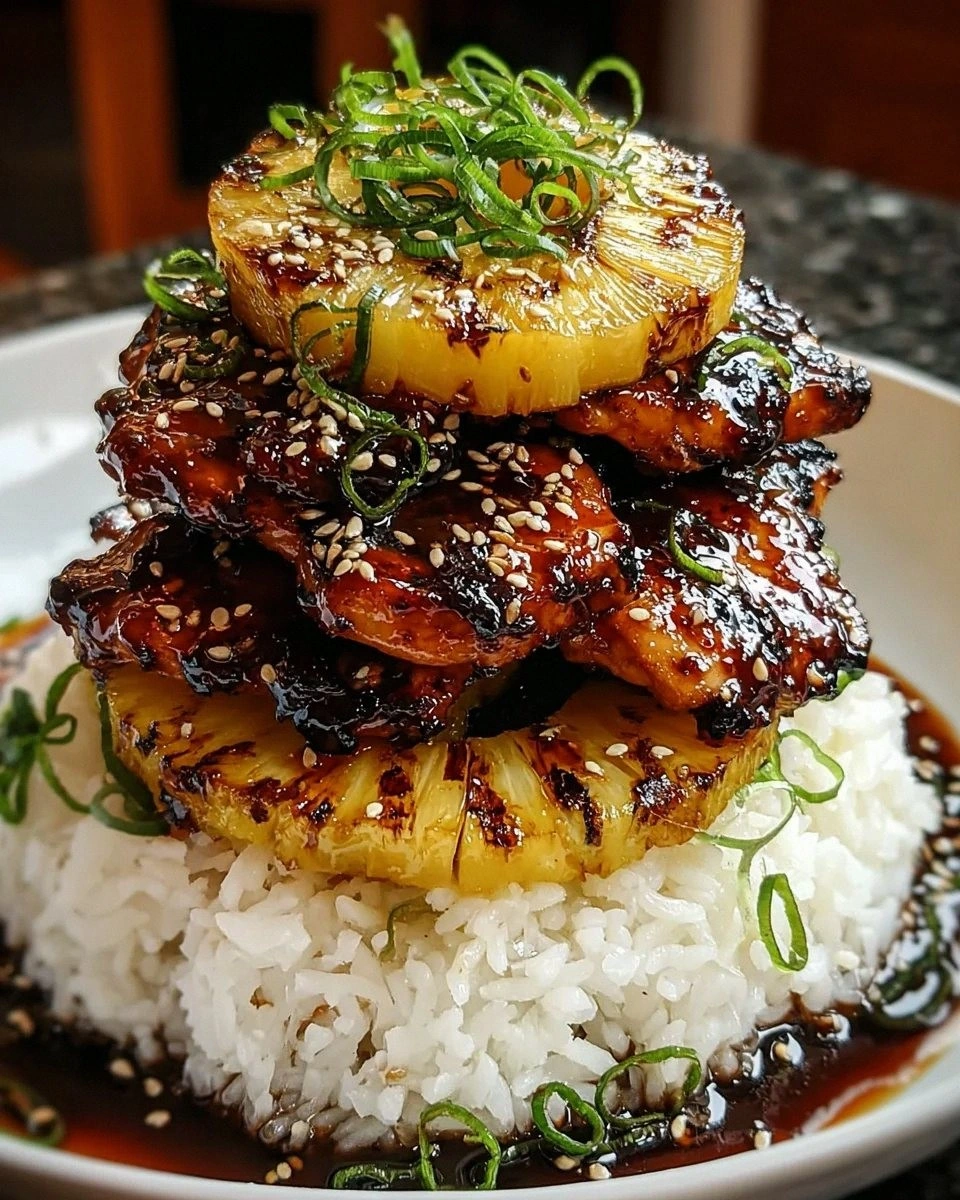
I’ll be honest — I ate half the batch before anyone else got to try it. It all started on a sweltering Saturday when my grill decided to take a vacation and my kitchen turned into a smoky battlefield. I was craving something that screamed summer, something that could make the whole neighborhood peek through the window and say, “What on earth is that heavenly aroma?” I grabbed a bottle of low‑sodium teriyaki, a can of pineapple juice, and a handful of fresh pineapple rings, and I thought, “Why not give Huli Huli a makeover?” The result? A stack of chicken, pineapple, and rice that looks like a tropical skyscraper and tastes like a luau in a bite.
Picture yourself pulling this out of the oven, the whole kitchen smelling incredible, the caramelized glaze glistening like sunrise on the Pacific. The first bite hits you with a sweet‑savory burst, then a subtle crunch from toasted sesame seeds, and finally the comforting hug of fluffy white rice that soaks up every drop of the glaze. That sizzle when it hits the pan? Absolute perfection. The sauce coats the chicken like a glossy, caramel‑kissed blanket, while the pineapple rings char just enough to bring out their natural sugars without turning mushy.
Most recipes get this completely wrong. They either drown the chicken in a syrupy mess or forget the crucial step of grilling the pineapple to add that smoky edge. Here’s what actually works: a balanced marinade that leans on low‑sodium teriyaki and pineapple juice, a quick sear that locks in juices, and a final grill that caramelizes the sugars without burning. I dare you to taste this and not go back for seconds; the flavor is so addictive you’ll be planning your next Huli Huli night before the plates are even cleared.
Let me walk you through every single step — by the end, you’ll wonder how you ever made it any other way. Okay, ready for the game‑changer? This next part? Pure magic. Stay with me here — this is worth it.
What Makes This Version Stand Out
- Flavor Explosion: The marriage of low‑sodium teriyaki, pineapple juice, and a touch of dark brown sugar creates a sweet‑savory glaze that sings with every bite. It’s not cloyingly sweet; the soy sauce adds depth, while the ginger and garlic give it a punch that wakes up your taste buds.
- Texture Symphony: Crispy, caramelized chicken edges contrast with the juicy tenderness of pineapple rings and the soft, fluffy rice base. The sesame seeds add a subtle crunch that makes each forkful interesting.
- Simplicity Meets Sophistication: Despite the complex flavor profile, the ingredient list is short, and the steps are straightforward enough for a weekday dinner yet impressive enough for guests.
- Unique Twist: Grilling the pineapple before stacking it with the chicken infuses a smoky nuance that most stovetop‑only versions miss. This tiny step transforms the dish from ordinary to unforgettable.
- Crowd Reaction: I’ve seen grown‑ups and kids alike line up for seconds, and even the most skeptical friends admit it’s “the best Hawaiian thing they’ve ever tasted.”
- Ingredient Quality: Using low‑sodium sauces lets the natural flavors shine without overwhelming salt, and fresh pineapple adds real fruit sweetness instead of canned sugar.
- Cooking Method: A quick sear locks in juices, then a short grill finish caramelizes the glaze. This two‑step approach guarantees juiciness and that coveted char.
- Make‑Ahead Potential: The chicken can be marinated overnight, and the assembled stack reheats beautifully, making it perfect for meal prep or a make‑ahead party dish.
Inside the Ingredient List
The Flavor Base
First up, low‑sodium teriyaki sauce. This is the backbone of the glaze, delivering that classic Hawaiian sweet‑savory note without drowning the dish in salt. If you skip it, you’ll lose the umami depth that makes the chicken sing. A good swap is a mix of reduced‑sodium soy sauce with a splash of honey, but you’ll miss the subtle tang that authentic teriyaki provides. Pro tip: Look for a teriyaki that lists real ginger and garlic in the ingredients for an extra flavor boost.
Next, pure pineapple juice. It’s the secret weapon that adds natural sweetness and a hint of tropical flair, making the chicken delightfully tender. The enzymes in pineapple actually help break down proteins, which is why the chicken stays juicy even after grilling. If you’re out of fresh juice, a splash of orange juice works in a pinch, though you’ll sacrifice a bit of that signature tang.
The Umami Boosters
Low‑sodium or naturally brewed soy sauce brings that essential umami kick without the extra sodium punch. It’s the quiet hero that balances the sweetness of the pineapple and brown sugar. If you’re watching sodium even more closely, try tamari; it has a richer flavor and is often lower in sodium.
Dark brown sugar adds depth and caramel notes, balancing the bright pineapple acidity. It’s the difference between a glaze that simply sweetens and one that truly caramelizes into a glossy, amber‑brown coating. A handy swap is coconut sugar, which gives a similar caramel flavor with a lower glycemic index.
The Aromatic Duo
Garlic cloves, minced, and freshly grated ginger form the aromatic backbone of the marinade. Garlic provides that familiar, comforting warmth, while ginger adds a zingy brightness that cuts through the sweetness. Skipping either will make the glaze feel flat; if you’re out of fresh ginger, a pinch of ground ginger works, but fresh is always better for that punch.
Toasted sesame oil is a tiny splash that packs a rich, nutty flavor, instantly elevating the Hawaiian theme. It’s best added at the end of the marinade so the delicate aroma isn’t lost to heat. If you don’t have toasted sesame oil, regular sesame oil works, but you’ll miss that toasty depth.
The Texture Crew
Fresh pineapple rings are the star of the show when it comes to texture. Grilling them brings out caramelized edges that contrast beautifully with the juicy interior. If you can’t find fresh rings, cut fresh pineapple into thick slices; just be sure they’re at least half an inch thick to hold up on the grill.
Cooked white rice serves as the perfect canvas, soaking up every drop of the glaze while keeping the dish grounded. Using a day‑old rice helps it stay separate and not turn mushy when the stack is assembled. For a healthier twist, swap in cauliflower rice, but expect a different mouthfeel.
The Final Flourish
Sliced green onions add a fresh, vibrant garnish that brightens the dish visually and flavor‑wise. Their mild onion kick balances the sweetness and adds a pop of color that makes the stack Instagram‑ready. If you’re not a fan of raw onions, give them a quick blanch in hot water to soften the bite.
Sesame seeds sprinkle on top for that final crunch and a touch of elegance. Toast them lightly in a dry pan for extra nuttiness; the aroma will fill your kitchen in seconds. Skipping the seeds is okay, but you’ll lose that satisfying finish.
Everything's prepped? Good. Let's get into the real action...
The Method — Step by Step
Start by whisking together low‑sodium teriyaki sauce, pure pineapple juice, soy sauce, dark brown sugar, minced garlic, grated ginger, and a drizzle of toasted sesame oil in a large bowl. The mixture should look glossy and the sugar should dissolve completely. I dare you to taste the raw marinade now — it should be sweet, salty, and a little spicy. Let the chicken pieces (breasts or thighs) dive into this bath, turning them over to ensure every surface is coated. Power transition: Okay, ready for the game‑changer?
While the chicken is soaking, preheat your grill or grill pan to medium‑high heat (about 400°F/200°C). Lightly oil the grates to prevent sticking. Meanwhile, slice the fresh pineapple into thick rings, about ½‑inch thick, and set them aside. The grill should be hot enough that when you place a pineapple ring, you hear an immediate sizzle.
Remove the chicken from the marinade, letting excess drip off, and reserve the remaining liquid for later. Pat the pieces gently with paper towels — you want a dry surface for a good sear. Place the chicken on the grill, skin‑side down if using thighs, and let it cook undisturbed for 4‑5 minutes. You’ll know it’s ready to flip when the edges start pulling away and the grill marks appear like tiny amber tattoos.
Flip the chicken and brush generously with the reserved marinade. Cook for another 4‑5 minutes, then add the pineapple rings to the grill, laying them beside the chicken. As the pineapple grills, it will develop those coveted char lines and a sweet caramel edge. Keep basting the chicken and pineapple with the remaining sauce every minute; this builds up layers of glossy glaze.
When the chicken reaches an internal temperature of 165°F (74°C) and the pineapple rings are golden with a slight caramelized crust, remove everything from the grill. Transfer the chicken to a cutting board and let it rest for 3‑4 minutes — this locks in the juices and prevents the meat from drying out.
While the chicken rests, prepare the rice. If you’ve cooked it ahead of time, fluff it with a fork and keep it warm. For an extra flavor boost, stir a teaspoon of toasted sesame oil into the rice and sprinkle a pinch of salt. This simple step ensures every bite of the stack has a buttery backdrop.
Now it’s time to assemble the stack. Spoon a generous mound of rice onto each serving plate, spreading it into a shallow well. Lay a strip of chicken on top, followed by a grilled pineapple ring, then another chicken strip, and repeat until you have a towering stack. Drizzle any remaining glaze over the top, let it pool slightly into the rice, and finish with a sprinkle of sliced green onions and sesame seeds.
Serve immediately while the glaze is still glossy and the rice is steaming. The contrast of hot, caramelized chicken, sweet pineapple, and the cool crunch of green onions creates a flavor fireworks display in your mouth. That’s it — you did it. But hold on, I've got a few more tricks that'll take this to another level...
Insider Tricks for Flawless Results
The Temperature Rule Nobody Follows
Never let your grill sit at a scorching high for the whole cooking process. Start at medium‑high to get those sear marks, then drop the heat a notch for the finish. This prevents the sugars from scorching while still giving the chicken a juicy interior. I once left the grill on max and ended up with a blackened mess — lesson learned.
Why Your Nose Knows Best
When the glaze starts to caramelize, you’ll smell a sweet, nutty aroma that’s unmistakable. If you can’t smell it, the heat is probably too low. Trust your nose more than the timer; the scent tells you when the glaze is ready to turn that beautiful amber.
The 5‑Minute Rest That Changes Everything
After grilling, let the chicken rest for at least five minutes. This short pause lets the juices redistribute, turning a potentially dry bite into a succulent mouthful. Skipping this step is the fastest way to ruin an otherwise perfect stack.
Sesame Oil Finish
A final drizzle of toasted sesame oil just before serving adds an aromatic finish that lifts the entire dish. It’s like the cherry on top, except it’s savory, nutty, and totally addictive.
The Rice Rescue
If your rice looks a little dry after sitting, splash a teaspoon of pineapple juice and fluff it gently. The juice re‑hydrates the grains and adds a subtle sweet note that ties the whole stack together.
Creative Twists and Variations
This recipe is a playground. Here are some of my favorite ways to switch things up:
Spicy Huli Huli
Add a tablespoon of sriracha or a pinch of crushed red pepper flakes to the marinade. The heat cuts through the sweetness, creating a balanced sweet‑spicy profile that will make heat‑seekers swoon.
Coconut‑Infused
Replace half of the pineapple juice with coconut milk and sprinkle toasted coconut flakes on the final garnish. This gives the dish a creamy, tropical twist that pairs beautifully with the sesame notes.
Veggie‑Loaded Stack
Layer thinly sliced bell peppers, red onions, and snap peas between the chicken and pineapple. The added crunch and color make the dish more vibrant and boost its nutritional profile.
Teriyaki Tofu Version
Swap the chicken for firm tofu blocks, pressed and marinated for the same amount of time. Grill the tofu until crispy on the edges; the result is a vegetarian-friendly stack that still delivers that iconic glaze.
Breakfast Remix
Serve the stack over a bed of fried rice mixed with diced ham and a sunny‑side‑up egg on top. The yolk creates a silky sauce that melds with the Huli Huli glaze for a brunch that feels like a vacation.
Storing and Bringing It Back to Life
Fridge Storage
Allow the stack to cool to room temperature, then place the components (chicken, pineapple, rice) in airtight containers. It will keep for up to three days. When ready to eat, reheat the chicken and pineapple in a skillet over medium heat, adding a splash of pineapple juice to keep them moist.
Freezer Friendly
Separate the chicken and pineapple from the rice, then flash‑freeze them on a tray before transferring to freezer bags. They’ll stay good for up to two months. Defrost overnight in the fridge, then reheat as above.
Best Reheating Method
Add a tiny splash of water or pineapple juice to the pan before reheating. Cover the skillet for a minute to steam the rice, then uncover to let the glaze re‑caramelize. This trick restores the original texture and prevents the chicken from drying out.