It all started on a rainy Saturday when my kitchen turned into a culinary battlefield and I was left with a half‑cooked pot of beef, a bag of orzo, and a can of tomatoes that looked more like a splash of red paint than a sauce. I stared at the mess, wondering how to salvage it, and then, like a sudden burst of inspiration, I decided to throw everything into a pot and let the flavors do the heavy lifting. The result was a comforting, aromatic stew that had my friends asking, “Where did you learn to make that?” I’m not exaggerating when I say that the first bite felt like a warm hug from an old friend who never left. That moment made me realize I had stumbled upon a recipe that deserved to be shared.
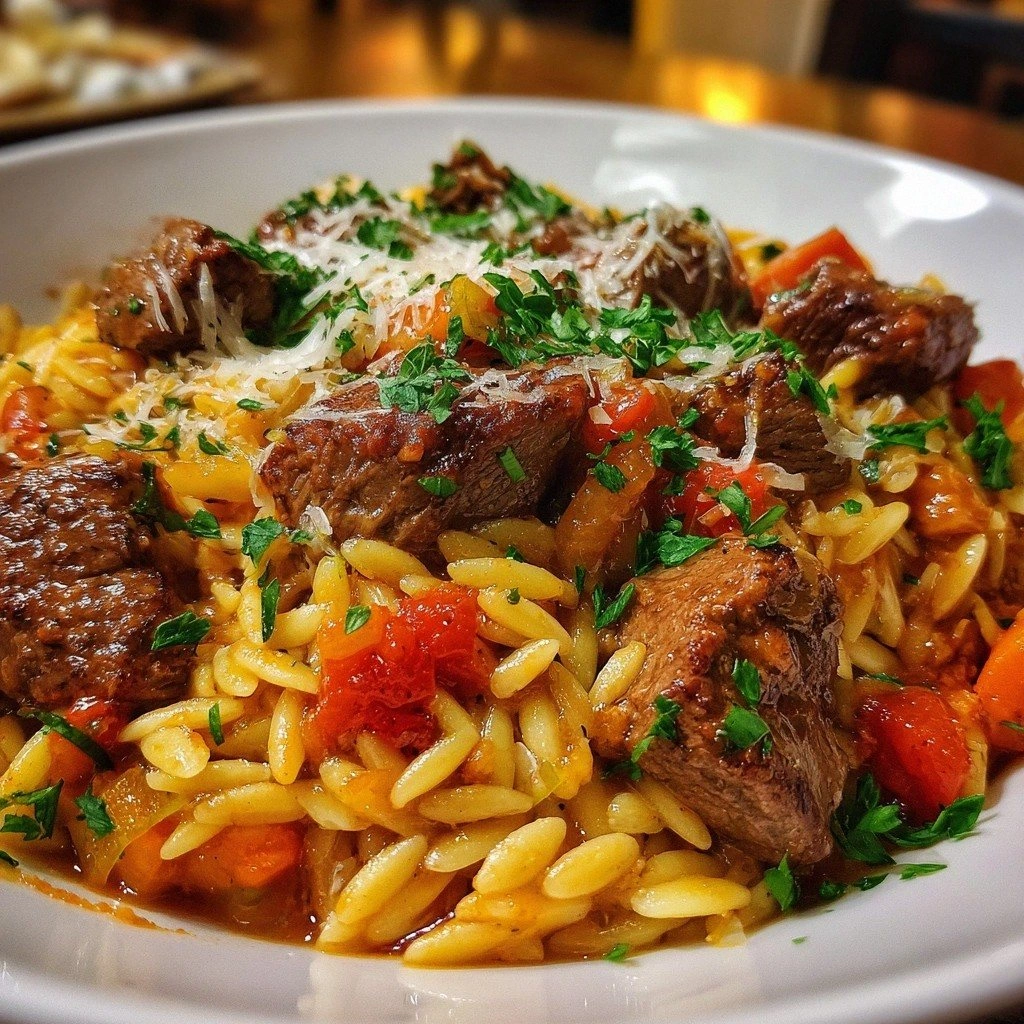
Picture this: the kitchen fills with the scent of caramelized onions and garlic, the sound of a gentle simmer, the sight of a thick, glossy tomato sauce coating the orzo like velvet, and the feel of a spoonful that warms your hands instantly. The first bite is a burst of umami from the beef, a subtle sweetness from the tomatoes, and a peppery kick from the oregano and thyme that lingers on your palate. The orzo offers a pleasant chew, each grain soaked in broth and coated in sauce, while the Parmesan adds a creamy, salty finish that ties everything together. Even the final sprinkle of fresh parsley offers a bright, herbaceous note that cuts through the richness. Every element works in harmony, creating a dish that feels both hearty and refined.
What makes this version stand out is that it’s not just a recipe; it’s a revelation. I’ve spent years experimenting with Greek‑inspired stews, but this one captures the essence of the Mediterranean with a comforting twist that feels like home. The beef is cut into generous cubes that sear beautifully, locking in juices and flavor, while the orzo acts as a sponge, absorbing the savory broth and adding a satisfying texture. The use of crushed tomatoes instead of whole or diced gives the sauce a silky consistency, and the blend of oregano and thyme brings a depth that elevates the dish beyond ordinary. I dare you to taste this and not go back for seconds.
And here’s the kicker: I’ll be honest — I ate half the batch before anyone else got a chance to try it. But that’s the proof that this isn’t just another stew; it’s the best version you’ll ever make at home. If you’ve ever struggled with bland orzo dishes, you’re not alone — and I’ve got the fix. Picture yourself pulling this out of the pot, the whole kitchen smelling incredible, and serving it to friends who will swear it’s restaurant‑quality. Let me walk you through every single step — by the end, you’ll wonder how you ever made it any other way.
What Makes This Version Stand Out
- Flavor: The combination of beef, oregano, thyme, and crushed tomatoes creates a savory, herbaceous profile that is unmistakably Greek.
- Texture: Orzo absorbs the sauce, turning each grain into a bite‑size pocket of flavor, while the beef stays tender yet slightly caramelized.
- Convenience: All ingredients are pantry staples, and the cooking time is under an hour, making it a perfect weeknight dinner.
- Versatility: This dish works as a main course, a hearty side, or even a filling for lasagna sheets.
- Make‑Ahead: It tastes even better the next day, so you can prep it in advance and reheat with a splash of broth.
- Nutrition: Balanced macros with protein, carbs, and healthy fats, plus a dose of veggies for vitamins.
- Presentation: A vibrant red sauce, golden orzo, and a sprinkle of parsley makes it Instagram‑worthy.
- Authenticity: Uses traditional Greek herbs and techniques while staying accessible to modern kitchens.
Alright, let’s break down exactly what goes into this masterpiece…
Inside the Ingredient List
The Flavor Base
The beef chuck cubes are the heart of this dish. They need to be cut into uniform 1‑inch pieces so they cook evenly and develop a caramelized exterior. If you’re short on time, you can use a quick‑cut or even a pre‑cubed store brand, but the texture will differ slightly. The crushed tomatoes provide acidity and sweetness that balance the richness of the beef. They also give the sauce its vibrant color and silky texture. If you prefer a chunkier sauce, substitute diced tomatoes, but remember to reduce the cooking time to prevent them from becoming mushy.
The Texture Crew
Orzo pasta is the perfect small pasta for stews; it soaks up liquid without disintegrating. Use medium‑sized orzo for a firmer bite, or fine orzo for a softer texture. The carrot and celery add subtle sweetness and earthiness, while the onion and garlic deliver the classic aromatic foundation. If you’re gluten‑free, replace orzo with quinoa or rice; the flavor will still shine through. The beef broth is the liquid backbone, infusing depth and richness that ties all components together. A high‑quality broth will elevate the dish, so consider using bone broth or a low‑sodium option to control salt levels.
The Unexpected Star
Parmesan cheese is the finishing touch that adds creaminess and a nutty finish. Grate it fresh to preserve flavor and avoid clumping. Fresh parsley offers a bright, herbal note that cuts through the richness. If you’re not a fan of parsley, dill or basil can be used, but they will alter the flavor profile. The dried oregano and thyme are classic Greek herbs; they provide a warm, slightly piney aroma that complements the tomatoes and beef. Use them in equal measure to keep the balance. A pinch of salt and pepper is essential, but taste as you go to avoid over‑salting.
Everything’s prepped? Good. Let’s get into the real action…
The Method — Step by Step
- Heat a large Dutch oven or heavy‑bottom pot over medium‑high heat. Add a splash of olive oil, then brown the beef cubes in batches. The goal is to develop a deep, caramelized crust that locks in juices. When the beef is browned, set it aside and repeat with the remaining pieces.
- Lower the heat to medium and add the diced onion, minced garlic, carrot, and celery to the pot. Sauté until the vegetables are translucent and fragrant, about 5 minutes. Stir occasionally to prevent sticking. The onions should form a golden base that forms the flavor foundation.
- Return the browned beef to the pot, then pour in the crushed tomatoes. Stir to combine, scraping up any browned bits from the bottom. These bits are packed with flavor. Bring the mixture to a gentle simmer.
- Add the beef broth, dried oregano, dried thyme, and a pinch of salt and pepper. Stir, then cover the pot and let it cook for 20 minutes on low heat. This allows the flavors to meld and the beef to become tender.
- Stir in the orzo pasta, making sure it’s fully submerged in the liquid. Increase the heat to medium and bring the mixture to a boil. Once boiling, reduce to a simmer and cook for 10–12 minutes, or until the orzo is al dente and most of the liquid has been absorbed. Stir occasionally to prevent sticking.
- Remove the pot from heat. Stir in the grated Parmesan and chopped parsley. The cheese will melt into the sauce, creating a creamy texture, while the parsley adds brightness. Taste and adjust seasoning if needed.
- Let the stew sit for 5 minutes before serving. This resting period allows the flavors to settle and the sauce to thicken slightly. Plate the dish, garnish with extra parsley and a sprinkle of Parmesan, and serve hot.
That’s it — you did it. But hold on, I’ve got a few more tricks that’ll take this to another level…
Insider Tricks for Flawless Results
The Temperature Rule Nobody Follows
Many people think high heat is always better, but for this dish, low and slow is the key. Cooking the stew at a gentle simmer allows the beef to break down without drying out. The orzo cooks evenly, absorbing the sauce’s richness. I’ve found that maintaining a steady 180°F (82°C) during the final simmer keeps the texture perfect. If you’re using a pressure cooker, set it to low pressure for the last 10 minutes.
Why Your Nose Knows Best
Smell the sauce as it simmers; a toasty, caramelized aroma signals that the beef has browned properly. If the smell is sour, you might have overcooked the tomatoes. A faint herbal scent from oregano and thyme indicates the herbs have released their essential oils. Trust your nose to guide seasoning adjustments. A well‑aromatized dish will taste richer.
The 5‑Minute Rest That Changes Everything
Letting the stew rest after cooking allows the flavors to marry and the orzo to finish absorbing liquid. The rest period also lets the Parmesan melt fully, creating a silky coating on each grain. I’ve seen friends skip this step and end up with a watery stew. A simple 5‑minute pause makes a noticeable difference in texture and taste.
Fresh Herbs Over Dried
While dried oregano and thyme are essential, adding fresh herbs at the end adds a burst of brightness. Use fresh parsley or dill to finish. Fresh herbs also reduce the need for extra salt, as they bring natural flavor. If you’re short on fresh herbs, a splash of lemon juice can brighten the dish.
Make‑Ahead Magic
This stew tastes even better the next day because the flavors deepen. Store it in an airtight container in the fridge for up to 3 days. When reheating, add a splash of beef broth or water to loosen the sauce. Reheat gently over low heat, stirring frequently. The orzo will absorb the liquid and regain its texture.
Creative Twists and Variations
This recipe is a playground. Here are some of my favorite ways to switch things up:
Mediterranean Chicken Orzo
Swap beef for diced chicken breast or thighs. Cook the chicken until browned, then follow the same steps. Add a pinch of saffron for a subtle, aromatic twist.
Spicy Arrabbiata Kick
Add a teaspoon of crushed red pepper flakes to the vegetables. The heat pairs nicely with the oregano and thyme, giving the dish an Italian‑style punch.
Vegetarian Version
Omit the beef and use a generous amount of sliced mushrooms and lentils. Increase the broth to compensate for the missing meat juices. The result is a hearty, plant‑based stew.
Pork & Sausage Fusion
Use pork shoulder cubes and a handful of Italian sausage links. The pork adds a smoky depth, while the sausage brings a peppery bite. Reduce the oregano slightly to balance the richer meats.
Pesto‑Infused Twist
Stir in a spoonful of basil pesto at the end. It adds a green, nutty flavor that complements the Parmesan and parsley. Serve with a side of crusty bread.
Low‑Carb Swap
Replace orzo with cauliflower rice or zucchini noodles. The dish remains filling while cutting down on carbs. Keep the rest of the ingredients the same for a familiar taste.
Storing and Bringing It Back to Life
Fridge Storage
Store the stew in an airtight container for up to 3 days. The orzo will absorb liquid, but the sauce remains thick and flavorful. Keep the container in the back of the fridge to maintain optimal temperature.
Freezer Friendly
Freeze the stew in portioned containers for up to 2 months. Thaw overnight in the fridge, then reheat on the stove with a splash of broth. The orzo will soften slightly, but the taste stays consistent.
Best Reheating Method
Reheat gently over low heat, stirring frequently. Add a small amount of water or broth to loosen the sauce. Let it come to a gentle simmer before serving. This restores moisture and prevents the dish from drying out.