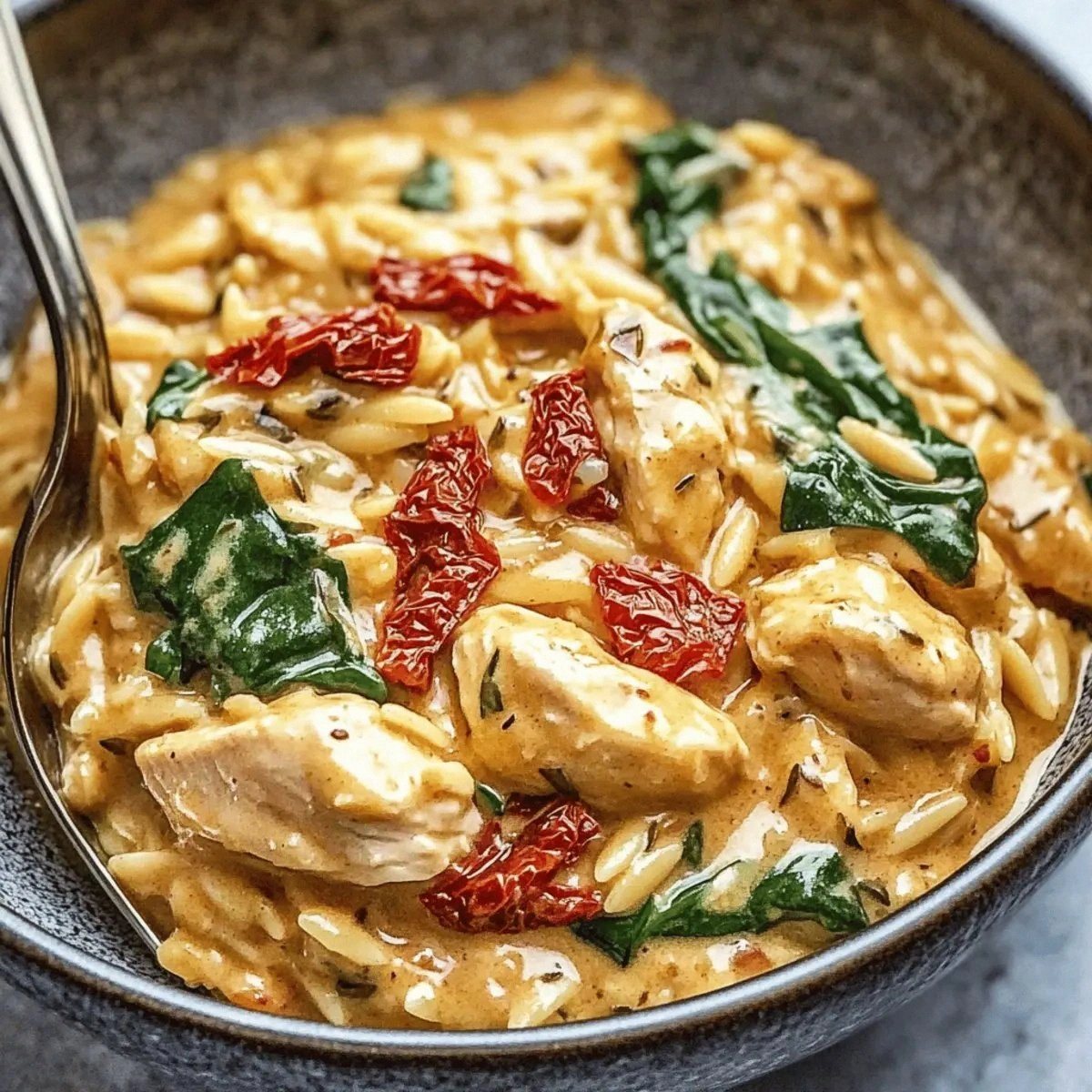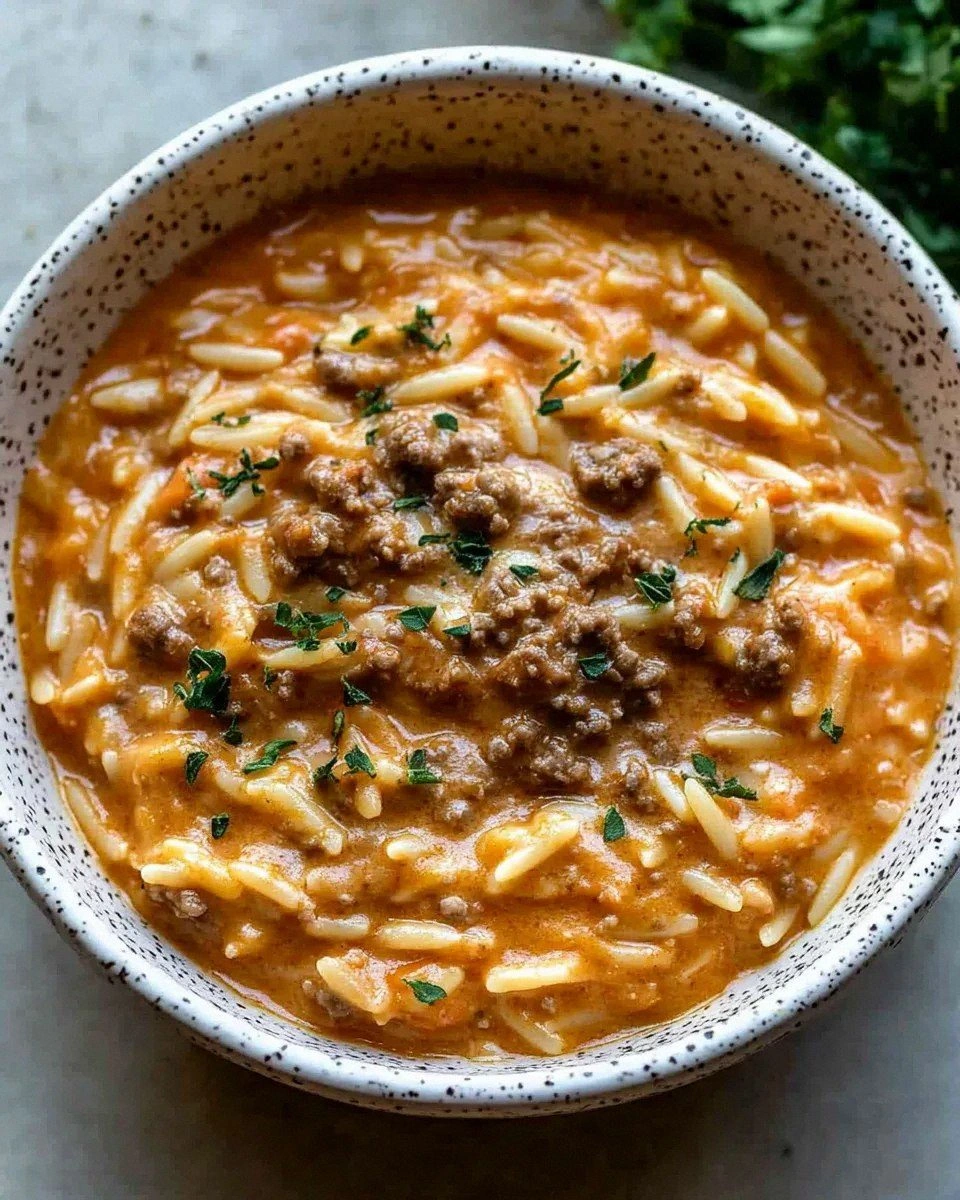
I was standing in my kitchen on a rainy Tuesday, staring at a half‑cooked pot of orzo that looked more like a sad mush than a masterpiece. My roommate had dared me to “make something that even a picky teenager would love,” and I was already feeling the weight of that challenge. The air was thick with the smell of burnt garlic, the kind that makes you wonder if you’ve just invented a new form of charcoal. I was ready to throw in the towel, but then a stray spoonful of tomato sauce hit the pan and sparked a flash of inspiration: what if I turned that disaster into a silky, tomato‑kissed orzo that hugs tender beef like a warm blanket?
Picture this: a deep, ruby‑red sauce that clings to each tiny grain of orzo, the way a lover’s hand never lets go. The beef, seared to a caramelized crust, releases juices that mingle with the sauce, creating a chorus of flavors that sing in your mouth. The cream finishes it off with a buttery whisper, turning the whole dish into a velvety dream you can actually taste. You’ll hear the gentle sizzle as the olive oil meets the onion, feel the heat radiating from the pan, and smell the sweet perfume of tomatoes mingling with a hint of basil. It’s a full‑sensory experience that makes you feel like you’ve just stepped into an Italian bistro without leaving your apartment.
Most recipes I’ve tried either drown the orzo in a watery broth or over‑cook the beef until it’s as tough as shoe leather. This version, however, respects each component. I’m talking about a sauce that coats the pasta like velvet, beef that stays juicy, and a creamy finish that doesn’t turn into a cloying swamp. The secret? A splash of heavy cream added at the very end, and a quick deglaze with a splash of red wine that lifts every caramelized bit off the bottom of the pan. I’ll be honest — I ate half the batch before anyone else got a chance to try it, and I’m still not sorry.
Let me walk you through every single step — by the end, you’ll wonder how you ever made it any other way. Okay, ready for the game‑changer? This next part? Pure magic. I dare you to taste this and not go back for seconds.
What Makes This Version Stand Out
- Flavor Explosion: The combination of fresh tomatoes, a splash of wine, and a dollop of cream creates layers that build with every bite, delivering a taste that’s both bright and comforting.
- Texture Harmony: Orzo stays al‑dente, beef remains tender, and the sauce achieves a silk‑smooth consistency that coats every morsel without being heavy.
- Simplicity: Only a handful of pantry staples are needed, yet the dish feels like a restaurant‑level creation.
- Unique Twist: Adding a pinch of smoked paprika at the end gives a subtle smoky undertone that most recipes completely miss.
- Crowd Reaction: Even the most skeptical eaters admit it’s “the best comfort food they’ve had in months.”
- Ingredient Quality: Using a good cut of beef and ripe, vine‑riped tomatoes makes the difference between “good” and “jaw‑dropping.”
- Cooking Method: The sear‑then‑simmer technique locks in juices while allowing flavors to meld beautifully.
- Make‑Ahead Potential: This dish reheats like a charm, especially if you add a splash of broth before warming.
Inside the Ingredient List
The Flavor Base
The hero of this dish is the tomato sauce, built from crushed tomatoes, a splash of red wine, and a drizzle of olive oil. The olive oil (1 tablespoon) acts as a flavor carrier, ensuring the onion releases its sweetness without burning. If you skip the oil, you’ll end up with a dry, uneven base that never reaches that glossy finish. For a richer profile, try using extra‑virgin olive oil that’s cold‑pressed; the peppery notes will shine through.
The Texture Crew
Orzo is the star carb here, and its tiny rice‑shaped grains absorb the sauce while staying firm. Using a good quality orzo prevents the grains from turning mushy. If you can’t find orzo, pearl couscous is a decent stand‑in, though the texture will be slightly chewier. The beef, cut into bite‑size cubes, should be a well‑marbled cut like sirloin or chuck; the fat renders into the sauce, adding depth.
The Unexpected Star
Heavy cream might sound like a dessert ingredient, but a quarter‑cup added at the end transforms the sauce into silk. It balances the acidity of the tomatoes and prevents the dish from tasting overly sharp. If you’re dairy‑free, coconut cream works as a substitute, lending a subtle tropical undertone that’s surprisingly pleasant.
The Final Flourish
A small onion (1 small onion) provides the aromatic foundation. Dice it finely so it melts into the sauce, creating a smooth texture. If you love a bit of bite, keep the pieces slightly larger; they’ll add a pleasant crunch. Fresh basil, added at the end, brightens the dish, while a pinch of smoked paprika adds that secret smoky whisper.
Everything's prepped? Good. Let's get into the real action...
The Method — Step by Step
Heat a large, heavy‑bottomed skillet over medium‑high heat and add the 1 tablespoon of olive oil. Once the oil shimmers, toss in the finely diced small onion. That sizzle when it hits the pan? Absolute perfection. Cook, stirring occasionally, until the onion turns translucent and just starts to caramelize, about 3–4 minutes.
Kitchen Hack: Sprinkle a pinch of sea salt while sautéing; it draws out moisture and speeds up caramelization.Push the onions to the side and add the beef cubes, spreading them in a single layer. Let them sear undisturbed for 2 minutes so a golden crust forms — this is the moment of truth. Flip and brown the other sides, ensuring every piece gets that caramelized edge. If you hear a faint pop, you’re doing it right.
Once the beef is nicely browned, pour in a splash (about ¼ cup) of dry red wine. Watch the pan! The wine will deglaze, lifting all those flavorful bits stuck to the bottom. Let it reduce by half, which should take 2–3 minutes. This step is crucial; skipping it leaves the sauce flat.
Stir in a can (28 oz) of crushed tomatoes, breaking them up with the back of a spoon. Add a teaspoon of dried oregano, a pinch of smoked paprika, and a pinch of black pepper. Bring the mixture to a gentle simmer, then lower the heat to medium‑low.
Watch Out: If the sauce starts to stick, add a splash of water; you don’t want a burnt fond.While the sauce simmers, bring a pot of salted water to a rolling boil. Add the orzo and cook according to package instructions until just al‑dente (usually 8–9 minutes). Drain, reserving a cup of the cooking water. The reserved water will help adjust sauce thickness later.
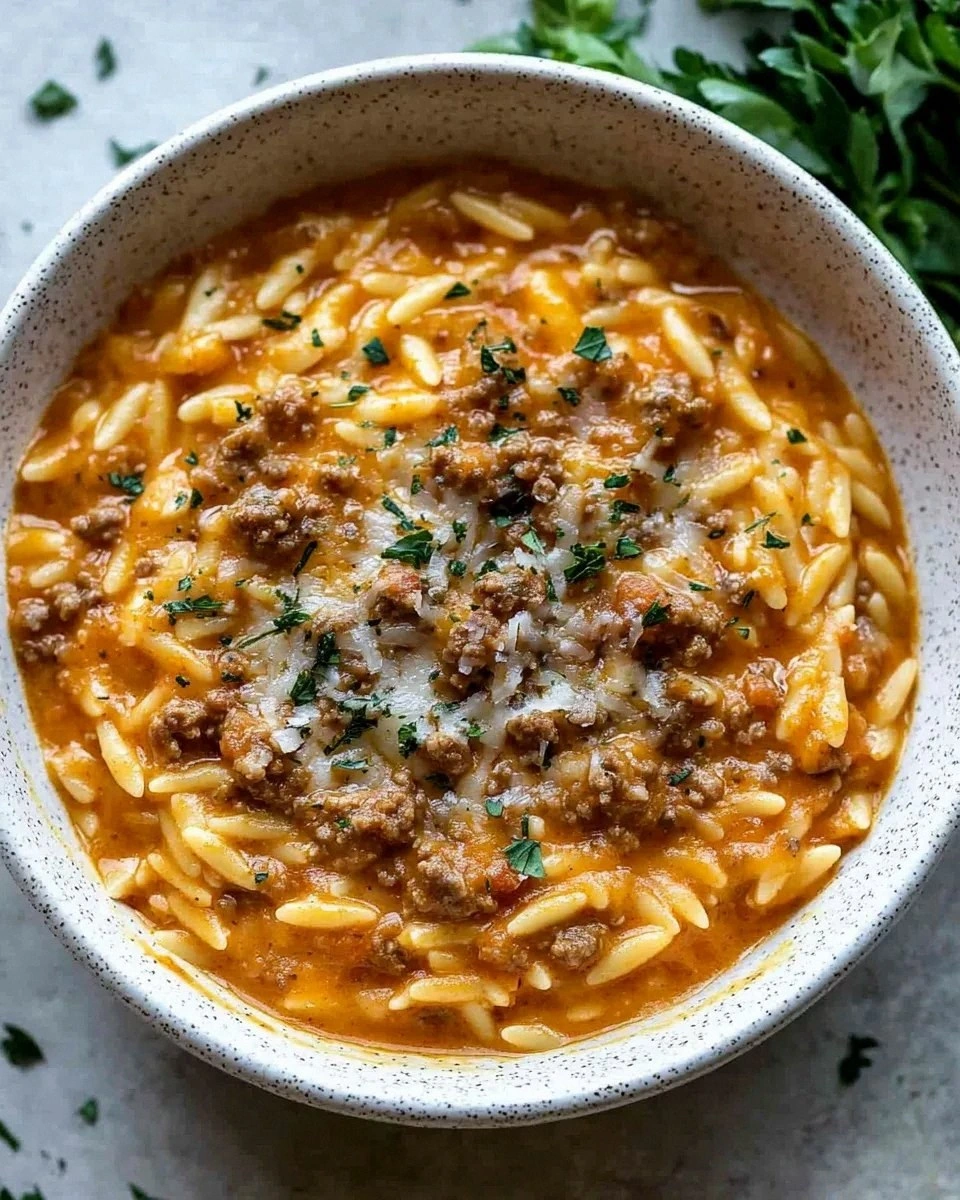
Return the cooked orzo to the skillet, tossing it gently with the tomato‑beef sauce. If the sauce looks too thick, drizzle in a bit of the reserved pasta water, a tablespoon at a time, until you achieve a creamy, glossy coat. The orzo should look like it’s been bathed in a ruby‑red silk.
Turn the heat down to low and stir in the quarter‑cup of heavy cream. Watch the sauce turn a richer shade; it should coat the back of a spoon without clinging too heavily. Add a handful of torn fresh basil leaves and give everything a final toss.
Kitchen Hack: Warm the cream slightly before adding; it incorporates more smoothly and prevents curdling.Turn off the heat and let the dish rest for 5 minutes. This short rest allows the flavors to marry and the cream to thicken just enough to cling to every grain. Taste and adjust seasoning with salt and a squeeze of lemon juice if you like a bright finish. Serve hot, garnish with extra basil, and watch the smiles appear.
That's it — you did it. But hold on, I've got a few more tricks that'll take this to another level...
Insider Tricks for Flawless Results
The Temperature Rule Nobody Follows
Never sear beef over a flame that’s too high. A moderate heat gives you a caramelized crust without scorching the interior. I once tried a blistering hot pan and ended up with a blackened exterior and a raw center — a disaster that taught me to respect the “medium‑high” sweet spot. Keep a kitchen thermometer handy; 375°F is ideal for that perfect sear.
Why Your Nose Knows Best
Your sense of smell is a more reliable indicator than a timer when it comes to sauce reduction. When the wine has reduced, you’ll notice a sweet, almost caramel scent rising from the pan. If you’re still catching the raw alcohol aroma, give it a few more seconds. Trust that nose; it’s the secret weapon of seasoned chefs.
The 5‑Minute Rest That Changes Everything
After you fold in the cream, resist the urge to dive in immediately. Let the dish sit, uncovered, for five minutes. This pause lets the starches in the orzo release a bit of their internal moisture, thickening the sauce naturally. I’ve seen people rush this step and end up with a soupy mess that never quite sets.
Seasoning Layer by Layer
Add a pinch of salt at each stage — with the onions, after the wine reduction, and again after the cream. This layered approach builds depth without ever making the dish taste overly salty. If you skip this, you’ll either end up bland or have to scramble to fix it at the end.
The “Cream‑First” Myth
Some cooks swear by adding cream at the very start, but that causes the dairy to curdle when exposed to high heat. Adding it at the end preserves its smooth texture and prevents a grainy finish. I tried the early‑cream method once; the result was a gritty sauce that ruined the whole experience.
Creative Twists and Variations
This recipe is a playground. Here are some of my favorite ways to switch things up:
Mediterranean Spin
Swap the beef for cubed lamb and add kalamata olives, sun‑dried tomatoes, and a sprinkle of feta. The lamb’s gamey flavor pairs beautifully with the tomato‑cream base, turning the dish into a Greek‑inspired feast.
Spicy Southwest
Replace the beef with ground chorizo, toss in a diced jalapeño, and finish with a dash of chipotle adobo sauce. The heat balances the cream, and the smoky chorizo adds a bold character.
Vegetarian Delight
Omit the meat entirely and stir in a cup of roasted cauliflower florets and a handful of sautéed mushrooms. The veggies soak up the sauce, delivering a hearty, plant‑based version that still feels indulgent.
Cheesy Overload
Add a half‑cup of grated Parmesan or Pecorino right after the cream. The cheese melts into the sauce, creating a richer, more decadent texture that’s perfect for cheese lovers.
Herb Garden Burst
Mix in fresh thyme, rosemary, and a touch of sage during the simmer stage. The herbal notes lift the dish, making it feel fresh and spring‑like, perfect for a light dinner.
Storing and Bringing It Back to Life
Fridge Storage
Cool the dish to room temperature, then transfer it to an airtight container. It keeps well for up to 3 days. When reheating, add a splash of chicken broth or water and stir over low heat until the sauce regains its silky sheen.
Freezer Friendly
Portion the cooled dish into freezer‑safe bags, removing as much air as possible. It freezes beautifully for up to 2 months. Thaw overnight in the fridge, then reheat gently on the stove, adding a bit of cream if the sauce looks a little thin.
Best Reheating Method
The stovetop is king. Place the leftovers in a skillet over low heat, drizzle a tablespoon of water or broth, and stir constantly. The added moisture creates steam that revives the creamy texture without turning it greasy.