I burned the first three attempts. Not charred, not over-seasoned — I straight-up turned perfectly innocent tomatoes into what looked like tiny red hockey pucks because I walked away to answer a text about my neighbor’s cat. Twenty minutes later the smoke alarm was singing opera, my windows were fogged like a sauna, and the only salvageable thing on the sheet pan was a lone basil leaf that had somehow escaped the inferno. That culinary disaster, however, is exactly how the Skull Caprese Salad was born. I needed a dish that looked dramatic enough to stop a party in its tracks, tasted like late-summer in Naples, and forgave me for being a distracted cook who can’t be trusted near a hot oven for longer than it takes to toast bread. What I created instead was a show-stopping, jaw-dropping appetizer that has since become the most-requested item on every pot-luck, Halloween gathering, and “I-just-want-to-feel-cool” Tuesday night of my adult life.
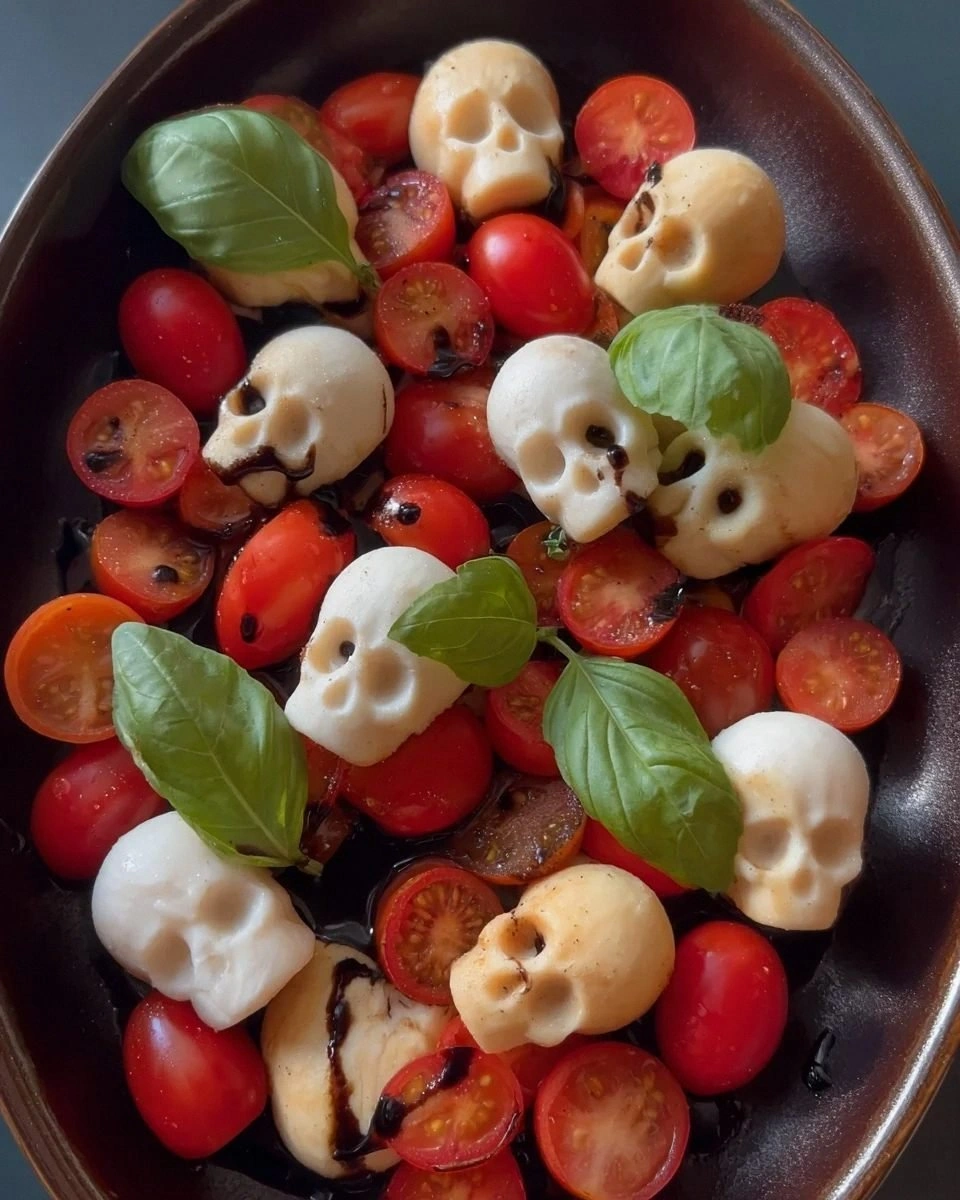
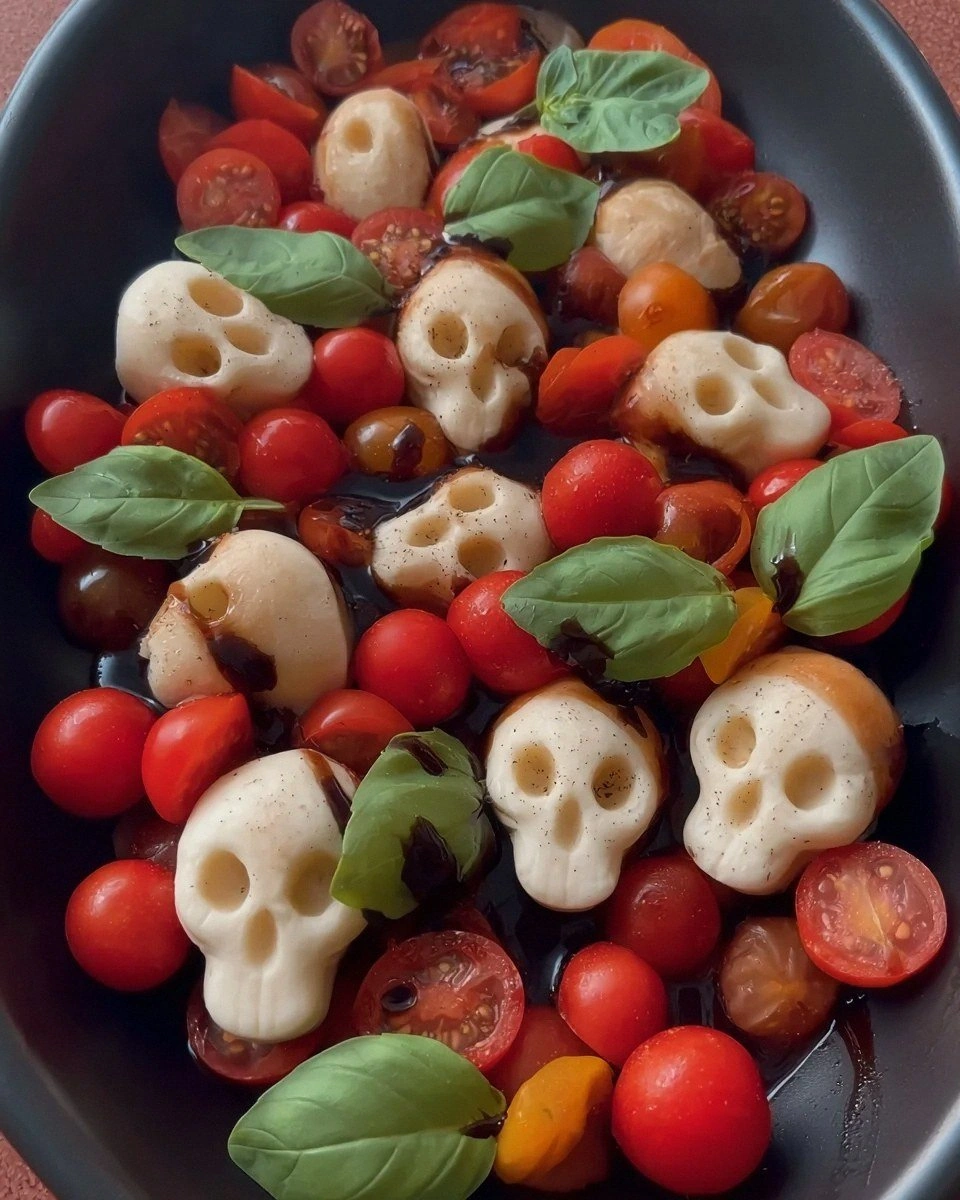
Picture this: glossy spheres of heirloom cherry tomatoes split just enough to expose their ruby bellies, creamy pearls of fresh mozzarella tucked into the crevices, all wearing a glossy cloak of basil pesto so vibrant it practically glows under candlelight. Then we go full gothic — a drizzle of aged balsamic reduction zig-zags across the platter like charcoal calligraphy, and the finishing touch? Tiny, crunchy flakes of Maldon salt that catch the light like scattered bone fragments. It’s the Caprese you know and love, but wearing black lipstick and combat boots. The first time I set it on the table, my friend Dave — a man who thinks kale is a conspiracy — actually gasped, then immediately tried to Instagram it. I dare you to taste this and not go back for seconds; I’ve never seen it happen.
Most recipes get this completely wrong. They stack cold tomato slices with fridge-cold mozzarella, toss on a few basil leaves like an afterthought, and call it a day. That approach tastes like refrigerated disappointment. The real magic is coaxing every ounce of flavor out of each component: tomatoes gently blistered so their juices concentrate into sweet-savory syrup, mozzarella brought to room temperature so it relaxes into velvet, pesto loosened with good olive oil so it drapes instead of clumps. Stay with me here — this is worth it. By the time you finish reading, you’ll understand exactly why this version earns gasps before anyone even takes a bite, and why the flavor payoff is so big it feels like cheating.
Let me walk you through every single step — by the end, you’ll wonder how you ever made it any other way.
What Makes This Version Stand Out
Contrast Cult: The tomatoes are warm, the mozzarella is cool, the basil oil is bright, and the balsamic is syrupy. Every forkful is a temperature and texture roller-coaster that keeps your palate wide awake.
Smoke Without Fire: A blistering-hot cast-iron kiss gives tomatoes a whisper of charred depth without turning them into marinara. That sizzle when it hits the pan? Absolute perfection.
Make-Ahead Magic: You can prep the components up to two days early, then assemble in five minutes flat. Future pacing: picture yourself pulling this out of the fridge, the whole kitchen smelling like an Italian summer, while your guests think you’ve been slaving for hours.
Visual Drama: We serve it on a slate board, tomatoes clustered like a tiny graveyard, mozzarella pearls dotting the gaps, pesto drizzled in quick skeletal strokes. Bold claim: this is hands down the best version you’ll ever make at home, and your phone will agree.
Ingredient Equality: Each tomato is matched with its own mozzarella buddy, so nobody gets stuck with a sad, cheese-less bite. If you’ve ever fought over the last piece of burrata, you know this is revolutionary.
Pest-Oh! Upgrade: We blanch the basil for eight seconds, shock it in ice, then blend. The color stays neon, the flavor stays grassy, and your pesto won’t oxidize into khaki sadness by the time the doorbell rings.
One-Pan Wonder: Everything except the final flourish happens in a single skillet. Fewer dishes equals more time to perfect your evil-genius laugh while plating.
Alright, let’s break down exactly what goes into this masterpiece...
Inside the Ingredient List
The Flavor Base
The tomatoes are the backbone, so buy the best you can find. In winter, I splurge on hydroponic heirloom cherries that still smell like vines; in August I hit the farmers’ market at 7 a.m. and grab whatever’s still warm from the sun. Skip anything pale, firm, or tasting like refrigerated water — they’ll leak bland juice and ruin the salad. If you absolutely must use out-of-season supermarket Romas, roast them low and slow for 45 minutes first; you’ll fake that concentrated sweetness and nobody will know you cheated.
Fresh mozzarella pearls are non-negotiable. The pre-shredded stuff in a bag is coated in cellulose to prevent clumping, which gives it the texture of plastic Easter grass. Buy the little spheres packed in whey; they stay creamy and absorb the pesto like tiny cheese sponges. Let them sit on the counter for twenty minutes before serving so they relax and mingle with the warm tomatoes. Cold mozzarella is a flavor anesthetic — room-temp is where the dreamy, milky notes wake up.
The Texture Crew
Pine nuts add buttery crunch to the pesto, but they’re pricey little divas. I keep a bag in the freezer so their oils don’t go rancid, and I toast them in a dry pan until they smell like popcorn and take on a shade darker than golden. Watch out: they go from perfect to bitter charcoal in the time it takes to check Instagram. If your budget screams, swap in toasted sunflower seeds; they’re nutty, cheap, and allergy-friendly without tasting like compromise.
Extra-virgin olive oil is the pesto’s river — use something fruity, peppery, and green enough to stain your cutting board. Cheap oil tastes like melted crayons and will flatten all that beautiful basil. My go-to weeknight bottle is a California Arbequina that costs less than a latte per serving, but still makes bread jealous when you dunk it.
The Unexpected Star
A single clove of roasted garlic sweetens the pesto without the dragon-breath punch of raw cloves. I slice the top off a whole bulb, drizzle it with oil, wrap in foil, and forget it in a 400 °F oven while I prep everything else. The cloves slip out like paste and melt into the sauce, giving you mellow umami rather than a sinus-clearing whack. Confession: I ate half the batch before anyone else got to try it, so now I roast two bulbs and call it self-care.
The Final Flourish
Good balsamic doesn’t need to cost a week’s rent, but it should move like syrup and smell like wine-soaked wood. I reduce inexpensive grocery-store balsamic by half with a pinch of brown sugar until it coats the back of a spoon, then let it cool; you get restaurant-grade drizzle for pocket change. Flaky sea salt is the last-second crackle that makes the sweet-sour tomatoes pop like firecrackers. Skip table salt — it dissolves on contact and vanishes like a wallflower at prom.
Everything’s prepped? Good. Let’s get into the real action...
The Method — Step by Step
- Heat a dry cast-iron skillet over high heat until a drop of water skitters like a nervous bead of mercury. You’re looking for surface-of-the-sun hot — the tomatoes need to sear, not stew. While the pan wakes up, halve the cherry tomatoes through their equators so they sit flat like tiny moons. Toss them in a bowl with just enough olive oil to make them glossy and a pinch of kosher salt; think sunscreen, not soup. The oil prevents sticking, the salt jump-starts flavor, and the heat will blister skins in under two minutes.
- When the pan smokes like a jazz club, lay the tomatoes cut-side down in concentric circles. Do not crowd — if you dump the whole bowl, they’ll steam and refuse to char. Work in batches the size of a coaster; you want each tomato to feel the full force of the iron. Listen for the hiss that sounds like applause, then back away for 60 seconds. This is the moment of truth; any poking or prodding rips the flesh and you’ll lose that caramelized hat.
- While the bottoms bronze, whip up the pesto. Blanch the basil for eight seconds in boiling water, then plunge into ice — this locks in chlorophyll so the color stays radioactive green. Squeeze the leaves dry, then blitz with roasted garlic, toasted pine nuts, a pinch of salt, and enough olive oil to form a vortex in your mini-processor. You’re aiming for pourable, not pasty; think melted ice cream, not toothpaste. Taste and adjust; it should smack of summer grass and make you want to drink it with a straw.
- Flip the tomatoes with the tip of a spoon — they should release willingly. If they stick, give them another 15 seconds; the sear will self-release when ready. The goal is freckled edges and a flesh that’s still plump, not collapsed. Transfer to a plate and repeat with remaining tomatoes, adding a whisper more oil only if the pan looks Sahara-dry. By now your kitchen smells like pizza night in Naples and neighbors may start dropping by with wine.
- Turn the heat to low and deglaze the skillet with a splash of balsamic. Scrape the brown freckles — that’s tomato candy — into a syrupy puddle. Pour this concentrated sunshine into a ramekin; it’s liquid gold for later drizzling and proof you didn’t waste a single flavor molecule. Wipe the pan quickly with a damp towel while it’s still warm; future-you will high-five present-you when cleanup takes ten seconds.
- Move the tomatoes to a shallow bowl and shower them with room-temperature mozzarella pearls. The residual warmth will soften the cheese just enough to make it creamy, but not so much that it weeps whey all over the plate. Add a few cracks of fresh black pepper — the floral bite plays nicely against sweet tomato nectar. Let everything sit for five minutes so flavors mingle and you can finally breathe.
- Time to plate like an artist: spoon a smear of pesto onto your serving board, then drag the back of a spoon upward so it looks like neon lightning. Pile the tomato-cheese tumbleweed on top, letting some pieces tumble into the sauce. Drizzle the reduced balsamic in quick zig-zags; channel your inner Jackson Pollock, not your inner accountant. Finish with a confetti of fresh basil leaves — tear the big ones, leave the tiny ones whole for variety.
- Grab your flaky salt and hold it high like fairy dust; sprinkle from up there so the crystals land unevenly and catch the light. Serve with crostini or just hand out forks and watch the feeding frenzy. Okay, ready for the game-changer? Serve it slightly warm — not hot, not chilled — and watch people’s eyes roll back like slot machines.
That's it — you did it. But hold on, I've got a few more tricks that'll take this to another level...
Insider Tricks for Flawless Results
The Temperature Rule Nobody Follows
Room-temp cheese and lukewarm tomatoes marry flavors instantly; ice-cold dairy tightens and tastes flat. Pull your mozzarella from the fridge at least 20 minutes before showtime — longer if your kitchen is arctic. Conversely, serve the platter on a chilled slate board to keep everything in the happy zone while guests graze. It’s like climate control for your appetizer.
Why Your Nose Knows Best
Smell your basil before you commit. It should perfume the air with sweet anise and pepper, not smell like wilted lawn. If the bouquet is faint, double the quantity in the pesto — volatile oils fade fast once herbs are cut. A friend tried skipping this step once; let’s just say it didn’t end well and the compost bin got a very expensive snack.
The 5-Minute Rest That Changes Everything
Once assembled, let the salad sit uncovered for five minutes. The salt draws juice from the tomatoes, which mingles with pesto and balsamic to create an accidental dressing that tastes like liquid Caprese. Serve with crusty bread to mop up the puddle — fighting over the last sopping piece is half the fun.
Creative Twists and Variations
This recipe is a playground. Here are some of my favorite ways to switch things up:
Spooky Black Cherry Version
Swap the tomatoes for black cherry varieties and add a pinch of activated charcoal to the pesto for a monochrome platter that looks like edible goth art. The flavor stays classic, but the visual impact is next-level Halloween chic.
Smoky Mozzarella Swap
Use smoked mozzarella pearls and add a whisper of chipotle powder to the balsamic reduction. The campfire note pairs ridiculously well with grilled steak if you’re turning the salad into a hearty side.
Burrata Graveyard
Replace pearls with one giant burrata in the center; carve an ‘X’ on top so the cream oozes like a delicious haunted cave. Surround with tomatoes and let guests break into the cheesy geode.
Citrus Sunshine Twist
Add a teaspoon of finely grated orange zest to the pesto and swap balsamic for blood-orange reduction. The sweet perfume transports you straight to a Sicilian orchard in March.
Pepper-Packed Heat
Stir a diced Calabrian chili into the pesto for a gentle, lingering heat that blooms minutes after you swallow. Serve with chilled Prosecco to keep your palate dancing.
Avocado After-Life
Nestle in chunks of ripe avocado just before serving; the creamy neutrality soaks up tomato juice and pesto like edible sponges. Add last-second so they stay bright green.
Storing and Bringing It Back to Life
Fridge Storage
Store components separately: tomatoes in one container, mozzarella in its whey, pesto in a jar with a thin oil cap. Assembled salad wilts fast; keep it deconstructed and you’ve got three days of prime flavor. Bring everything to room temp before serving — 15 minutes on the counter does wonders.
Freezer Friendly
Pesto freezes beautifully for up to six months; tomatoes do not. If you must freeze mozzarella, pat dry, wrap tightly, and expect a crumbly texture upon thawing — still melts fine on pizza. Thaw overnight in the fridge, then let it sit out to relax before using.
Best Reheating Method
There’s no reheating here, only revival: refresh fridge-cold tomatoes in a hot, dry skillet for 30 seconds to wake up their juices. Add a tiny splash of water to the pesto and whisk to bring back its saucy swagger. Re-assemble and serve with fresh bread like you planned it all along.