I still remember the first time I attempted to make seared salmon at home. The kitchen looked like a crime scene — oil splattered across every surface, the smoke alarm serenading me at full volume, and a piece of salmon that resembled shoe leather more than anything you'd want to eat. My dinner guests politely chewed through the charred remains while I mentally planned my escape from culinary embarrassment. Fast forward through countless experiments, a few cooking classes, and what my friends now call my "salmon obsession phase," and I've finally cracked the code to what might be the most foolproof, restaurant-quality seared salmon with corn and asparagus succotash you'll ever make in your own kitchen.
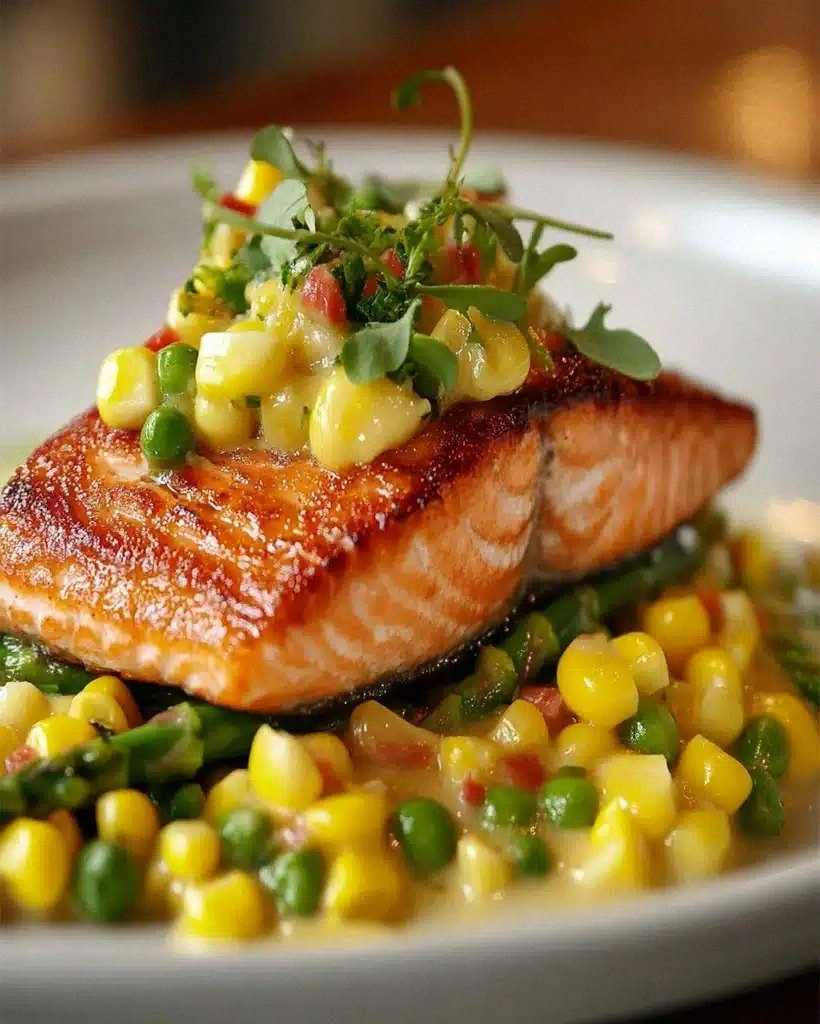
Picture this: crispy-edged salmon with flesh so perfectly pink and flaky it practically melts on your tongue, sitting atop a mountain of succotash so vibrant and fresh it looks like summer decided to throw a party on your plate. The corn pops with sweetness, the asparagus brings that grassy crunch, and everything gets tied together with a buttery sauce that'll have you licking your plate when nobody's watching. I know that's a bold claim, but I dare you to taste this and not go back for seconds. Actually, I double-dog-dare you — because I've watched self-proclaimed salmon-haters demolish this dish and ask for the recipe before they've even finished chewing.
What makes this version different? Instead of the usual dry, overcooked salmon that tastes like punishment for trying to eat healthy, we're working with a technique that ensures a shatter-crisp skin and tender interior every single time. The succotash isn't just some sad afterthought either — it's a celebration of textures and flavors that transforms a simple piece of fish into a complete meal that'll make you feel like you've got your life together. And here's the kicker: despite tasting like you spent hours slaving away, the whole thing comes together in under 45 minutes. Most recipes get this completely wrong, treating the salmon and succotash as separate entities that happen to share a plate. Here's what actually works.
Let me walk you through every single step — by the end, you'll wonder how you ever made it any other way.
What Makes This Version Stand Out
Crispy Skin Guarantee: The secret isn't just high heat — it's a combination of proper pat-drying, the right oil temperature, and a technique I learned from a cranky French chef that involves pressing down on the fish for the first 30 seconds. This creates skin so crispy it shatters like thin ice under your fork, while keeping the flesh underneath succulent and never dry.
Restaurant-Quality Pan Sauce: While your salmon rests (yes, we're resting fish now), we'll deglaze the pan with white wine and butter, scraping up all those gorgeous brown bits called fond. The result is a silky sauce that coats everything like velvet and makes you look like you went to culinary school.
Seasonal Flexibility: Fresh corn in summer is obviously incredible, but this recipe works year-round with frozen corn that's been quickly charred in a hot skillet. The asparagus can swap for green beans, snap peas, or even broccoli florets depending on what's fresh and affordable.
One-Pan Wonder: Everything happens in a single large skillet — first the salmon, then the succotash uses the same pan, soaking up all that salmon flavor. Less dishes means more time for that second glass of wine.
Meal Prep Champion: The succotash actually tastes better the next day after the flavors meld, making this perfect for Sunday cooking and Monday lunch that'll make your coworkers jealous. The salmon is best fresh, but I'll share my secrets for reheating without turning it into cardboard.
Impressive Yet Approachable: This dish looks fancy enough for date night or dinner parties, but it's forgiving enough that even kitchen novices can nail it. I've taught this recipe to friends who burn water, and they've all succeeded on the first try.
Alright, let's break down exactly what goes into this masterpiece...
Inside the Ingredient List
The Flavor Base
The salmon itself is obviously the star, but not all salmon is created equal. I'm talking about center-cut fillets that are at least 1 inch thick — anything thinner will overcook before your skin gets crispy, and that's a tragedy I wouldn't wish on my worst enemy. Look for pieces with bright, firm flesh that springs back when pressed, not those sad, pale ones that have been sitting under fluorescent lights since yesterday. The skin should be shiny and metallic, not dull or slimy, and if you can smell anything "fishy," walk away immediately. Fresh salmon smells like the ocean, not like fish.
Butter is our next MVP, and I'm not talking about that sad margarine impostor. Real, unsalted butter lets you control the salt level while creating the most luscious pan sauce you've ever tasted. European-style butter with its higher fat content makes an even silkier sauce, but honestly, whatever's in your fridge will work. Just promise me you won't use that weird "buttery spread" stuff — your taste buds deserve better than that.
The Texture Crew
Fresh corn when it's in season is like eating sunshine, but here's where most recipes mess up — they just throw raw corn into the succotash and hope for the best. We're going to char ours in a smoking hot pan until some kernels turn golden and start to pop, creating these little sweet explosions that contrast beautifully with the tender salmon. If you're working with frozen corn (and I've been there), spread it on a towel first to absorb excess moisture, then give it a quick sauté until you see some color developing.
Asparagus brings that springtime freshness, but timing is everything. Too brief and it's raw and grassy, too long and you've got army-green mush that tastes like disappointment. We're looking for that sweet spot where it's tender-crisp and still vibrant green — about 3-4 minutes in a hot pan should do it. Pro tip: snap the ends off by bending the asparagus until it naturally breaks; where it snaps is nature's way of telling you where the tender part begins.
The Unexpected Star
Red bell pepper adds sweetness and color, but the real secret is how we're going to cook it. Instead of throwing it in raw, we're going to char it slightly so the edges blister and the natural sugars caramelize. This creates these little pockets of concentrated flavor that make people pause mid-chew and ask "what did you do differently?"
Shallots are my choice over onions here — they're milder, sweeter, and they melt into the background without overwhelming the delicate salmon. If you can't find shallots, a small onion works, but shallots are worth hunting down for their subtle complexity.
The Final Flourish
Fresh herbs at the end aren't optional — they're what separates good home cooking from restaurant-quality dishes. A handful of chopped parsley adds brightness, but the real game-changer is fresh tarragon. Its slight anise flavor plays beautifully with both the salmon and the vegetables, creating this sophisticated note that makes people think you've got secret culinary training.
Lemon zest and juice right at the end wake everything up like a splash of cold water on a sleepy face. We're adding zest to the succotash while it cooks, then fresh juice right before serving. This two-stage approach gives you layers of citrus flavor without the harsh acidity that can make delicate fish taste metallic.
Everything's prepped? Good. Let's get into the real action...
The Method — Step by Step
- Start by patting your salmon fillets absolutely dry with paper towels — and I mean dry. Moisture is the enemy of crispy skin, so press down firmly and change towels if needed. Season both sides generously with salt and pepper, but go lighter on the skin side since that gets the most intense heat. Let the salmon sit at room temperature for 15 minutes while you prep everything else — cold fish hitting a hot pan is a recipe for disaster. Picture yourself pulling this out of the oven, the whole kitchen smelling incredible, and knowing you're about to serve something extraordinary.
- Heat your largest skillet over medium-high heat for 2 full minutes — don't rush this part. Add 2 tablespoons of oil with a high smoke point (grapeseed, canola, or avocado work beautifully) and swirl to coat. When the oil shimmers and moves like water, it's ready. That sizzle when it hits the pan? Absolute perfection. Carefully lay the salmon skin-side down, pressing each fillet firmly with a spatula for 30 seconds to ensure maximum skin contact.
- Here's where most people mess up — they keep poking and prodding. Don't. Let the salmon cook undisturbed for 6-7 minutes. You'll see the flesh change from translucent to opaque about two-thirds of the way up the sides. When the skin releases easily from the pan (no sticking!), it's ready to flip. If it's fighting you, give it another minute. Flip gently and cook for just 2-3 minutes more for medium-rare. Transfer to a warm plate and tent loosely with foil while we work magic with the succotash.
- In the same pan (don't you dare wash it — those brown bits are liquid gold), reduce heat to medium and add a tablespoon of butter. Toss in your diced shallots and red bell pepper, scraping up the fond as they soften. After 3-4 minutes, when the vegetables start to turn golden, add the corn kernels. Spread them in a single layer and don't stir for 2 minutes — we want some char on those babies. The sound of corn kernels popping against hot metal is one of life's simple pleasures.
- Add the asparagus pieces and cook for another 3-4 minutes, stirring occasionally. You're looking for bright green, tender-crisp vegetables that still have some snap. Season with salt and pepper, then add a splash of white wine to deglaze the pan. Let it bubble away for a minute, then stir in another tablespoon of butter to create a glossy sauce that clings to every vegetable. This next part? Pure magic.
- Off the heat, stir in the fresh herbs, lemon zest, and a squeeze of lemon juice. The residual heat will wilt the herbs just enough to release their oils without turning them brown and sad. Taste and adjust seasoning — this is where you channel your inner chef and add "a little something" until it makes you want to do a happy dance.
- Now for the grand finale — nestle your perfectly cooked salmon back into the succotash, skin-side up to maintain that crispy texture we worked so hard for. Spoon some of the vegetables and sauce over the top, letting it cascade down the sides like a savory waterfall. If you've ever struggled with dry, overcooked salmon, you're not alone — and I've got the fix right here in your hands.
- Garnish with extra fresh herbs and lemon wedges on the side. The contrast of the crispy-skinned salmon against the tender-crisp vegetables, all brought together with that buttery, herb-flecked sauce, is the kind of thing that makes people close their eyes involuntarily when they take the first bite. Okay, ready for the game-changer?
That's it — you did it. But hold on, I've got a few more tricks that'll take this to another level...
Insider Tricks for Flawless Results
The Temperature Rule Nobody Follows
Here's the thing about salmon — it's not chicken. While your grandmother might clutch her pearls at the thought, medium-rare salmon (125°F internal temp) is where the magic happens. The flesh should flake but still have a translucent center that looks like coral. If you wait until it's completely opaque throughout, congratulations, you've made expensive cat food. A friend tried skipping this step once — let's just say it didn't end well, and her dinner party became a pizza delivery story she still tells with shame.
Invest in an instant-read thermometer. Seriously. It's the difference between guessing and knowing, and at $15-20, it's cheaper than ruining another $30 worth of salmon. Pull your fish when it hits 120°F — it'll carry over to 125°F while resting. This 5-minute rest that changes everything lets the juices redistribute, ensuring every bite is moist and flavorful instead of dry and disappointing.
Why Your Nose Knows Best
Don't just set a timer and walk away — your senses are your best kitchen tools. When the salmon is perfectly seared, you'll smell nuttiness and butter, not fishiness. The sound changes too — from aggressive sizzling to a gentler crackle. And visually, watch the color creep up the sides like a reverse hourglass. When it's about two-thirds opaque, it's flip time. These sensory checkpoints are more reliable than any recipe timing, because every piece of fish and every pan is slightly different.
The Skin Game
If you're one of those people who removes salmon skin, we're going to need to have a serious talk. That skin, when properly cooked, becomes nature's potato chip — crispy, salty, and packed with omega-3s. The trick is starting with a cold fish, hot pan, and not moving it around. Once it's crispy, it practically lifts itself off the pan. And now the fun part — serve it skin-side up to maintain that texture. Letting it sit in sauce or succotash will turn it soggy faster than you can say "what went wrong?"
The Herb Timing
Fresh herbs are not created equal when it comes to heat tolerance. Hardy herbs like thyme and rosemary can handle some cooking, but delicate ones like parsley, tarragon, and chives should always go in at the very end. They'll wilt from the residual heat but maintain their bright color and fresh flavor. Adding them too early is like buying a beautiful dress and then wearing it to paint your house — you've wasted something special for no good reason.
Creative Twists and Variations
This recipe is a playground. Here are some of my favorite ways to switch things up:
The Mediterranean Makeover
Swap the tarragon for oregano and basil, add kalamata olives and sun-dried tomatoes to the succotash, and finish with feta cheese crumbled over everything. Use cherry tomatoes instead of bell peppers for a pop of acidity. This version pairs beautifully with a crisp Greek white wine and makes you feel like you're dining on a terrace overlooking the Aegean Sea, even if you're actually in a studio apartment overlooking a parking lot.
The Asian-Inspired Edition
Replace the butter with sesame oil, add ginger and garlic to the vegetables, and finish with soy sauce and rice vinegar. Top with toasted sesame seeds and sliced scallions. The corn and asparagus work surprisingly well with these flavors, and the umami bomb from the soy creates an entirely different but equally addictive dish. I'll be honest — I ate half the batch before anyone else got to try it when I first made this version.
The Spicy Southwest Version
Add diced jalapeños with the shallots, swap the tarragon for cilantro, and finish with lime juice instead of lemon. Stir in a spoonful of chipotle peppers in adobo sauce for smoky heat that builds slowly. The sweet corn is the perfect foil for the spice, creating a balance that keeps you coming back bite after bite. Serve with avocado slices and watch even spice-lovers reach for their water with delight.
The Winter Comfort Version
When fresh corn is but a distant memory, swap it for butternut squash cubes that you roast separately until caramelized. Replace asparagus with Brussels sprout leaves that get crispy at the edges. Add sage instead of tarragon for that cozy autumn flavor. The salmon remains the constant star, but the supporting cast creates a completely different seasonal experience that'll warm you from the inside out on cold nights.
The Brunch Brilliance
Make the succotash as directed, then top it with perfectly poached eggs instead of salmon. The runny yolk creates a sauce that mingles with the vegetables in ways that'll make you rethink everything you thought you knew about breakfast. Add some smoked salmon on the side if you can't live without your fish fix. This variation saved my brunch party when my vegetarian friend showed up unexpectedly.
The Double Protein Power
For the especially hungry, add crispy pancetta or bacon to the succotash. Start by rendering the pork in the pan, then use the fat to cook everything else. The smoky, salty pork plays beautifully with the sweet corn and fresh herbs. It's overkill for most nights, but sometimes you need that extra indulgence. Future pacing: imagine yourself serving this at your next dinner party, watching guests' eyes widen as they take their first bite.
Storing and Bringing It Back to Life
Fridge Storage
Store leftover salmon and succotash separately in airtight containers. The salmon keeps for up to 3 days, the succotash for 5. Here's the key — don't microwave the salmon unless you enjoy eating sadness. Instead, let it come to room temperature for 30 minutes, then warm it gently in a 275°F oven for 10-12 minutes. Add a tiny splash of water before reheating — it steams back to perfection and prevents that dreaded dry texture that makes people hate leftover fish.
Freezer Friendly
Cooked salmon freezes surprisingly well if you do it right. Cool completely, wrap tightly in plastic wrap then foil, and freeze for up to 2 months. The succotash can freeze too, though the vegetables will lose some texture. Thaw overnight in the fridge, then reheat as above. Pro tip: freeze individual portions so you're not committed to eating salmon for a week straight, though honestly, is that such a bad thing?
Best Reheating Method
For the succotash, a quick sauté in a hot pan actually improves it — the vegetables get a second chance to caramelize. Add a splash of water or stock to loosen it up, then finish with fresh herbs to brighten everything. If you've got leftover salmon that's seen better days, flake it cold over a salad or stir it into the succotash for a whole new dish. Sometimes the best meals come from creative desperation in using up leftovers.