I was standing in my kitchen, staring at a pot of bland, overcooked stew that had been left to simmer for hours, when a sudden craving hit me like a bolt of lightning. I wanted something comforting, hearty, and full of color—something that could turn a dreary weekday into a culinary celebration. I pulled out the ingredients from the pantry, the fridge, and the freezer, and I was about to create a dish that would become my new go-to comfort food. The idea was simple: combine the richness of beef, the sweetness of carrots, and the crunch of green beans into a single, soul‑warming bowl.
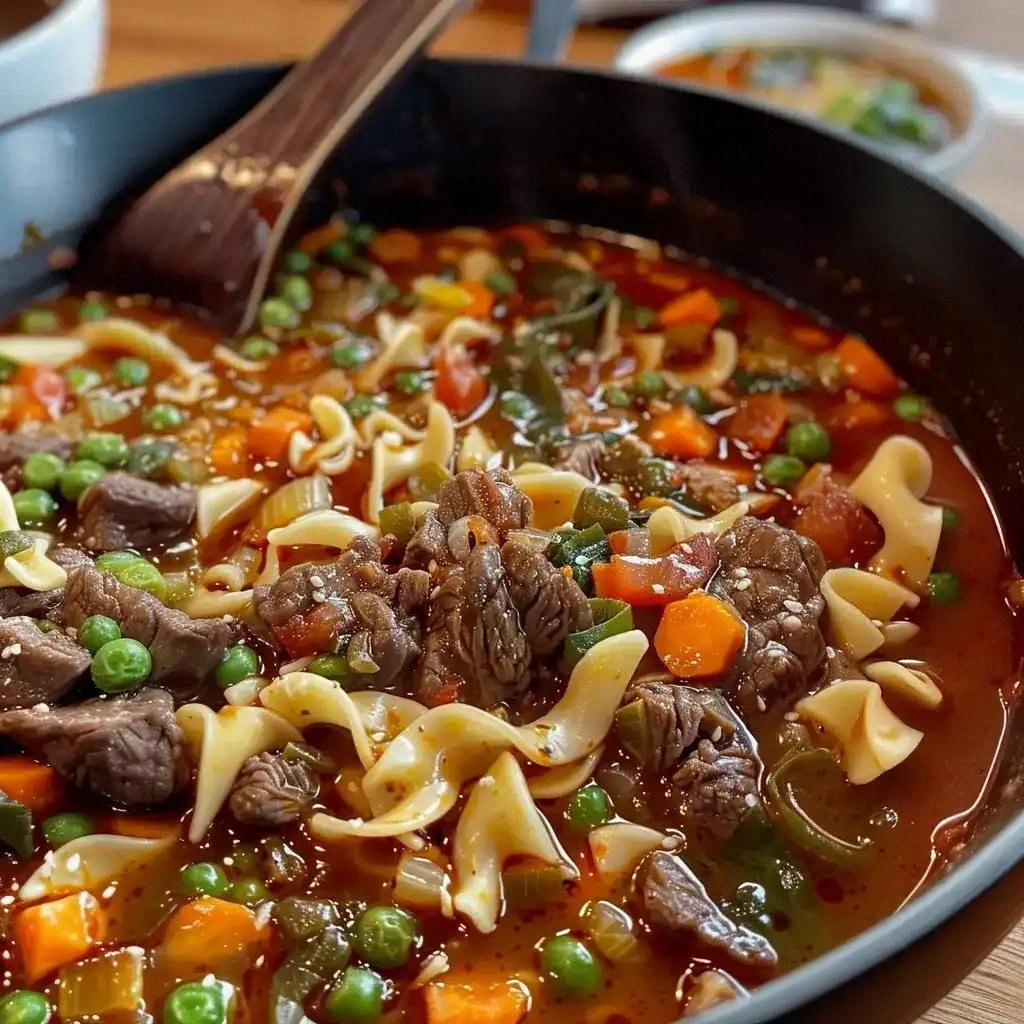
Imagine the aroma that begins to fill the kitchen: the deep, meaty scent of browned beef, the sweet perfume of caramelized onions, the sharp tang of fresh herbs. The sound is a rhythmic sizzle as the oil meets the pan, a steady hiss that signals the start of something delicious. The texture of the vegetables, once they hit the pot, is a satisfying contrast—softening carrots, tender celery, and a hint of crispness from the frozen peas. When you finally taste it, the broth is a velvety, umami‑laden hug that wraps around every bite, while the noodles are al dente, offering a subtle chew that complements the tender meat.
What sets this version apart from the countless other recipes you’ll find online is its meticulous layering of flavors and textures. I didn’t just throw everything into the pot; I built a flavor base, added a texture crew, and then crowned the dish with a final flourish that elevates it from good to unforgettable. I dare you to taste this and not go back for seconds—once you’ve had a bowl, you’ll never settle for a plain, run‑of‑the‑mill soup again. This is hands down the best version you’ll ever make at home, and I’m about to spill every secret that makes it so.
Picture yourself pulling this out of the pot, the whole kitchen smelling incredible, steam curling like a soft blanket over the countertop. The first spoonful is a burst of savory richness, followed by the bright snap of fresh herbs and the comforting weight of noodles. The moment you finish the last spoon, you’ll feel like a culinary superhero, ready to conquer whatever comes next. Let me walk you through every single step—by the end, you’ll wonder how you ever made it any other way.
What Makes This Version Stand Out
- Flavor Depth: The slow browning of the beef creates a caramelized crust that locks in juices, giving the broth a rich, complex base that’s impossible to replicate with quick‑cook methods.
- Texture Harmony: The mix of soft potatoes, crisp green beans, and al dente noodles balances each bite, preventing the soup from feeling either too heavy or too light.
- Ingredient Quality: Using a high‑quality beef stew meat and fresh, unprocessed herbs ensures that each component shines through, turning a simple dish into a gourmet experience.
- Time Efficiency: While it feels like a labor of love, the method actually cuts down on prep time thanks to pre‑chopped veggies and a quick sear that saves you from a long, slow simmer.
- Make‑Ahead Friendly: The soup holds its flavor beautifully when refrigerated or frozen, making it a perfect meal prep option for busy weeknights.
- Versatility: The recipe’s core structure allows for endless tweaks—swap the beef for chicken, use gluten‑free noodles, or add a splash of soy sauce for an Asian twist.
- Crowd Appeal: It’s the kind of dish that can feed a family, feed a group of friends, or even be portioned into individual containers for lunches.
- Comfort Factor: The warm, hearty broth feels like a hug in a bowl, making it the perfect antidote to cold evenings or a post‑workout pick‑me‑up.
Inside the Ingredient List
The Flavor Base
The foundation of this soup starts with a generous amount of beef stew meat, which, when seared until browned, releases a deep, savory flavor that permeates the entire broth. Olive oil isn’t just a cooking medium; it carries the aromatics, helping the onions, garlic, and herbs bloom into a fragrant symphony. If you skip the browning step, the soup will feel flat—no caramelized notes, no depth.
Onions are the sweet, mellow backbone of any savory dish. They soften into a translucent, almost syrupy texture that sweetens the broth without overpowering the beef. A good rule of thumb: use a large onion so that the sweetness can develop fully. If you only have a small one, double the quantity to maintain flavor intensity.
The Texture Crew
Carrots and celery bring a satisfying bite and natural sweetness. Cutting them into uniform cubes ensures even cooking, so you don’t end up with some pieces mushy and others still crunchy. Potatoes add heartiness and body, soaking up the broth and becoming a comforting, starchy component that makes the soup filling.
Frozen peas, corn, and green beans are the secret to a vibrant color palette and a burst of sweetness. Using frozen veggies saves prep time and guarantees peak flavor because they’re frozen at the height of freshness. If you prefer fresh veggies, just be sure to blanch them quickly to preserve their bright color.
The Unexpected Star
The can of tomatoes (or tomato sauce) injects acidity and body, balancing the richness of the beef and the sweetness of the vegetables. A splash of tomato adds depth, turning the broth into a slightly tangy, savory canvas that complements the herbs. Without it, the soup would lean too much toward heaviness.
The Final Flourish
Egg noodles or any pasta of your choice bring the final element of chewiness. Egg noodles, in particular, absorb the broth beautifully, creating a silky texture that feels like a comforting hug. Fresh parsley, added at the very end, gives a bright, herbal lift that cuts through the richness and leaves a clean finish.
Everything's prepped? Good. Let's get into the real action.
The Method — Step by Step
- Heat the olive oil in a large stockpot over medium‑high heat. Add the beef in a single layer, letting it sear without stirring for 3–4 minutes per side until a deep brown crust forms. This caramelization is key to a rich broth. Watch the oil shimmer; that’s the sign it’s hot enough.
- Remove the beef and set it aside. In the same pot, add the diced onion and a pinch of salt. Sauté until the onions are translucent and fragrant, about 5 minutes. The onions should be soft, not browned—this keeps the soup from becoming bitter.
- Add the minced garlic to the pot and cook for 30 seconds, just until the aroma releases. Be careful not to burn it; a burnt garlic will ruin the entire flavor profile. This step is the moment of truth—if it smells wrong, the soup is doomed.
- Return the browned beef to the pot. Add the carrots, celery, potatoes, and the can of tomatoes. Stir everything together, ensuring the vegetables are coated in the beef juices. This creates a unified base where each ingredient sings.
- Pour in the beef broth and water. Bring the mixture to a gentle boil, then reduce the heat to low. Cover and let it simmer for 45 minutes, stirring occasionally. The broth should thicken slightly and the vegetables should become tender.
- Season the soup with thyme, basil, oregano, salt, and pepper. Taste and adjust—add more pepper if you want a kick, or a pinch of sugar if the acidity is too sharp. This is the flavor tuning stage; small tweaks can make a big difference.
- Add the frozen green beans, corn, and peas. Simmer for an additional 10 minutes until the vegetables are heated through and the broth is fragrant. Keep the pot covered to lock in the steam, which helps the veggies retain their bright color.
- Stir in the egg noodles and cook for 8–10 minutes, or until al dente. If you prefer a firmer noodle, reduce the cooking time by a minute. The noodles should absorb some broth, creating a silky texture.
- Finish the soup by adding fresh parsley and a squeeze of lemon juice if you like a bright finish. Ladle into bowls and serve hot. The final garnish adds a fresh, herbal note that lifts the entire dish.
That's it — you did it. But hold on, I've got a few more tricks that'll take this to another level.
Insider Tricks for Flawless Results
The Temperature Rule Nobody Follows
Many cooks think a gentle simmer is enough, but the secret lies in maintaining a steady, low heat that keeps the broth from boiling violently. A rolling boil can break down the delicate textures of the vegetables and make the noodles soggy. Keep the heat on low and let the soup bubble lazily.
Why Your Nose Knows Best
Trust your olfactory senses. The moment the broth smells toasty, the flavor is developing. If it smells raw or metallic, the beef might need more time to brown. Your nose is your best quality control.
The 5-Minute Rest That Changes Everything
After removing the pot from heat, let the soup sit for five minutes before serving. This allows the flavors to meld and the broth to thicken slightly. I’ve seen friends who skip this step and complain about a thin, watery soup.
Don’t Walk Away From the Stove Here
During the last 10 minutes of simmering, keep an eye on the pot. The vegetables can quickly overcook, turning mushy. A quick stir and a gentle reduction of heat will keep everything crisp.
Add a Splash of Water Before Reheating
If you’re reheating leftovers, add a splash of water or broth before microwaving. This prevents the soup from drying out and keeps the noodles from becoming gummy.
Use a Dutch Oven for Depth
A heavy‑bottomed Dutch oven distributes heat evenly, ensuring the beef sears properly and the vegetables cook uniformly. I’ve tried this with a regular pot, but the edges got burnt while the center stayed raw.
Creative Twists and Variations
This recipe is a playground. Here are some of my favorite ways to switch things up:
Spicy Sriracha Kick
Add a tablespoon of sriracha or a pinch of red pepper flakes during the seasoning step. The heat pairs beautifully with the beef and brightens the broth.
Asian Fusion Twist
Replace the beef with thinly sliced pork or chicken. Add a splash of soy sauce and a teaspoon of sesame oil. Garnish with sliced scallions and toasted sesame seeds.
Gluten‑Free Noodle Swap
Use rice noodles or spiralized zucchini instead of egg noodles. The dish remains hearty, and the noodles absorb the broth wonderfully.
Vegetarian Powerhouse
Swap the beef for a hearty chunk of seared tofu or tempeh. Use vegetable broth and add extra mushrooms for umami.
Summer Citrus Freshness
Finish the soup with a squeeze of fresh orange or grapefruit juice and a sprinkle of chopped cilantro. The citrus brightens the dish and makes it feel lighter.
Smoky Chipotle Flavor
Add a teaspoon of chipotle in adobo sauce during the simmering phase. The smoky undertone gives the soup a depth reminiscent of a slow‑cooked barbecue.
Storing and Bringing It Back to Life
Fridge Storage
Cool the soup to room temperature before transferring it to airtight containers. Store in the fridge for up to 4 days. The noodles may absorb some broth, but the flavors remain robust.
Freezer Friendly
Divide the soup into portioned freezer bags or containers, leaving a little headspace. Freeze for up to 3 months. Thaw overnight in the fridge before reheating.
Best Reheating Method
Reheat gently on the stovetop, adding a splash of water or broth to loosen the consistency. Stir frequently to prevent sticking. A quick microwave reheat works, but be sure to stir halfway through.