I was standing in my kitchen at midnight, the kind of late‑night desperation that only a stubborn craving can produce. My roommate had just finished a marathon of “The Office” reruns and declared, “I dare you to make something that’ll make me forget the pizza we ordered last night.” I stared at a lonely bag of 85 % lean ground beef, a half‑empty jar of flour, and a lone onion that looked like it had survived a war. The sizzle of that beef hitting a hot pan was the soundtrack to my promise: I would create a dish so comforting that the pizza would feel like a cold apology.
The kitchen quickly turned into a sensory theater. The olive oil shimmered like liquid gold as it warmed, the onion hit the pan and released a sweet, caramelizing perfume that made my nostrils do a little dance. The garlic followed, its sharp aroma cutting through the sweet notes like a witty one‑liner in a sitcom. When the tomato paste hit the mixture, it deepened the color to a ruby hue, and the broth began to bubble, turning the whole pot into a bubbling cauldron of anticipation. I could already picture the dumplings puffing up, their tops turning golden‑brown, the butter melting into them like a warm hug.
Most comfort‑food recipes either drown you in grease or leave you with a dry, flavorless mess. This version, however, walks the line between hearty and elegant. The secret? A double‑duty use of flour that gives the gravy a silk‑smooth body and the dumplings a cloud‑like texture, plus a splash of milk that makes the dumpling dough buttery without being heavy. I also toss in a pinch of thyme and paprika, which most “one‑pot” recipes completely ignore, and the result is a depth of flavor that makes you wonder why you ever settled for anything less.
Okay, ready for the game‑changer? I’m about to walk you through every single step — by the end, you’ll wonder how you ever made this dish any other way. I promise you’ll be able to taste the difference the moment the first dumpling hits your tongue, and I dare you to taste this and not go back for seconds. Let’s get cooking.
What Makes This Version Stand Out
- Flavor Depth: The combination of tomato paste, thyme, and paprika creates a gravy that’s richer than a Sunday roast, coating every bite like velvet.
- Texture Contrast: Silky gravy meets pillowy dumplings that melt in your mouth, delivering a mouthfeel that’s both comforting and surprising.
- Simplicity: Only one pot is needed, which means fewer dishes and more time to actually enjoy the food instead of washing up.
- Ingredient Quality: Using an 85 % lean ground beef keeps the dish juicy without the greasy aftertaste that can ruin a comfort meal.
- Crowd Reaction: This dish has a built‑in “wow” factor; even the toughest critics will admit it’s the best version they’ve ever tasted at home.
- Make‑Ahead Potential: You can prep the dumpling dough in advance, store it in the fridge, and drop it in when you’re ready to serve.
- Seasonal Flexibility: Swap peas for carrots, corn, or even a handful of kale — the base stays delicious year‑round.
- Budget Friendly: All the ingredients are pantry staples, so you won’t need a trip to a specialty store to pull this off.
Inside the Ingredient List
The Flavor Base
Ground beef is the heart of this dish. I swear by an 85 % lean mix because it stays juicy without drowning the gravy in fat. If you opt for a leaner 90 % blend, drizzle a tablespoon of olive oil into the pan to keep the meat from drying out. The onion and garlic are the aromatic duo that builds the foundation; skipping them would be like trying to paint a masterpiece without any color. A good tip is to sauté the onion until it’s translucent and just starting to brown — that’s when it releases its natural sugars, adding a subtle sweetness that balances the savory beef.
The Texture Crew
All‑purpose flour is the unsung hero, used twice for two very different reasons. First, a tablespoon or two tossed into the beef mixture thickens the gravy, giving it that luxurious, spoon‑coating body. Second, the same flour joins butter and milk to form the dumpling dough; the butter creates flaky layers while the milk provides moisture, resulting in dumplings that are tender on the inside and lightly crisp on the outside. If you’re gluten‑free, swap the flour for a 1:1 gluten‑free blend — just make sure it contains xanthan gum so the dumplings hold together.
The Unexpected Star
Tomato paste may seem modest, but its concentrated sweetness and acidity lift the entire gravy, preventing it from feeling heavy. A single tablespoon can turn a flat broth into a vibrant, ruby‑red sauce that clings to the dumplings like a second skin. If you don’t have tomato paste, a splash of ketchup works in a pinch, though you’ll lose some of that deep umami. Beef broth is the liquid backbone; using a low‑sodium version lets you control the salt level more precisely, while a rich, homemade broth adds an extra layer of depth that store‑bought versions can’t match.
The Final Flourish
Seasonings are where personality shines. Dried thyme contributes an earthy, almost piney note that complements the beef, while paprika adds a gentle smokiness and a pop of color. Salt and pepper are, of course, essential; taste as you go, because the broth may already carry some salt. Frozen peas or mixed vegetables are optional, but they bring a sweet pop and a splash of green that makes the plate look restaurant‑worthy. Finally, a pat of butter folded into the dumpling dough ensures each bite is buttery bliss.
Everything's prepped? Good. Let’s get into the real action…
The Method — Step by Step
Heat a large, heavy‑bottomed pot over medium‑high heat and add the olive oil. Once the oil shimmers, drop in the diced onion. Stir constantly for about three minutes until the onion turns translucent and begins to caramelize. You’ll hear a gentle sizzle that signals the start of flavor building. Pro tip: If the onions start to brown too quickly, lower the heat a notch to avoid burning.
Add the minced garlic and let it dance for 30 seconds — just until it becomes fragrant but not browned. Then, crumble the ground beef into the pot, breaking it up with a wooden spoon. Cook for five to seven minutes, stirring occasionally, until the beef loses its pink hue and starts to develop a light crust. That crust is pure flavor gold; don’t rush it.
Sprinkle two tablespoons of all‑purpose flour over the beef and stir vigorously. This is the first flour moment: it will absorb the meat juices and begin forming the gravy’s body. Cook the flour‑beef mixture for another two minutes, allowing the raw flour taste to evaporate. Watch Out: If you see the mixture sticking to the bottom, add a splash of broth to deglaze and keep the gravy smooth.
Stir in the tomato paste, thyme, paprika, and a pinch of salt and pepper. Let the spices toast for about one minute, releasing their essential oils. Then, pour in the beef broth gradually, scraping the bottom of the pot to dissolve any browned bits. Bring the mixture to a gentle boil, then reduce to a simmer. At this point, the gravy should be thick enough to coat the back of a spoon but still a little fluid; it will thicken further when the dumplings cook.
While the gravy simmers, prepare the dumpling dough. In a medium bowl, combine the remaining half‑cup of flour, softened butter, and milk. Mix with a fork until the dough comes together in shaggy clumps; you don’t want a perfectly smooth dough, because those little pockets of flour turn into steam pockets during cooking, giving you that airy bite. Let the dough rest for five minutes while the gravy continues to bubble.
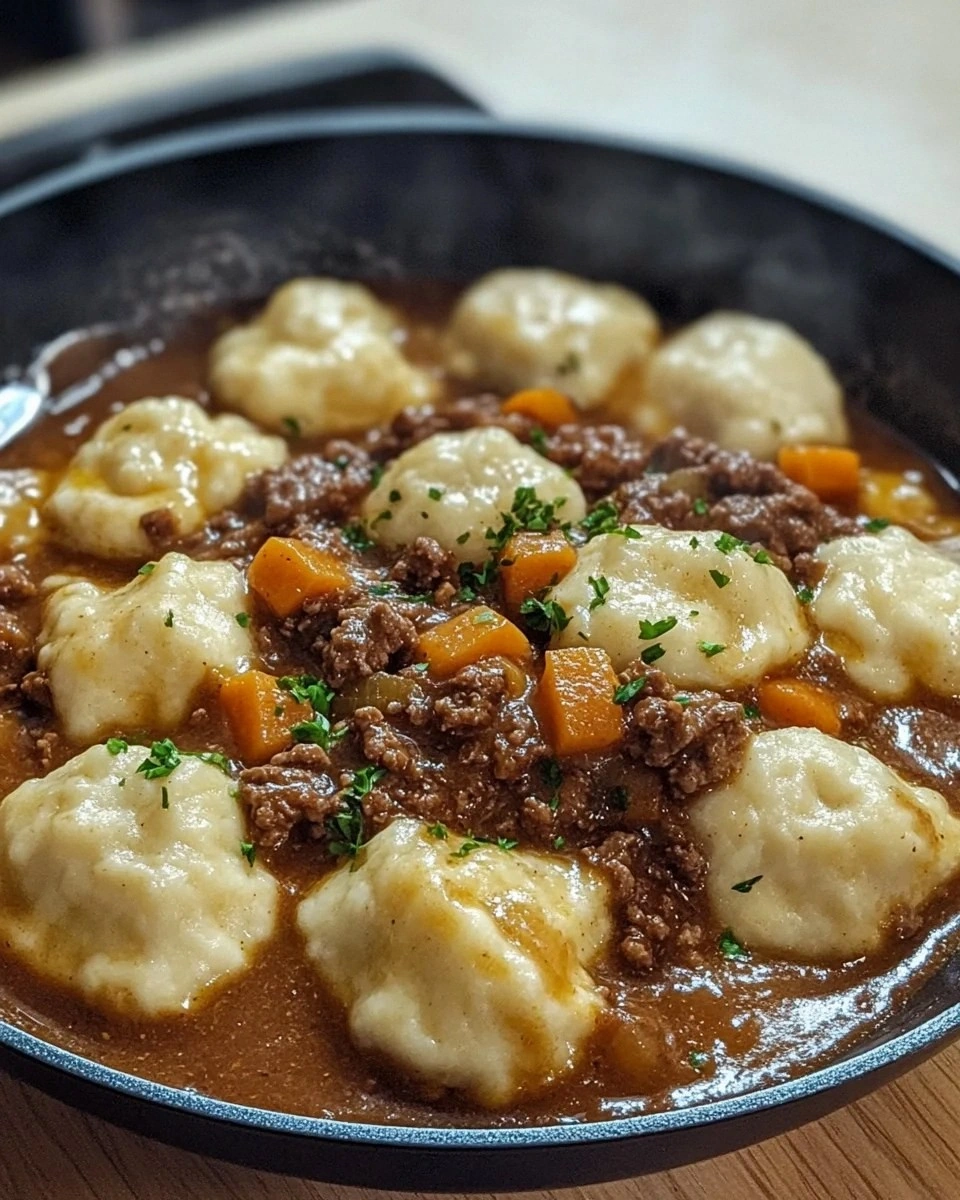
Using a spoon, drop generous tablespoon‑sized mounds of dough onto the simmering gravy. The dumplings should sizzle as they hit the liquid, and the edges will start to pull away after a couple of minutes — that’s your cue that they’re setting. Cover the pot with a tight‑fitting lid and let the dumplings steam for 12‑15 minutes. Resist the urge to lift the lid; steam is the secret engine that puffs the dumplings up.
After the dumplings have steamed, stir in the frozen peas or mixed vegetables. They’ll heat through in just two minutes, adding a pop of color and a sweet contrast to the savory gravy. Taste the sauce and adjust seasoning with a pinch more salt or a dash of pepper if needed. The final aroma should be intoxicating — a blend of beefy richness, buttery dough, and herbaceous notes that makes your kitchen feel like a cozy bistro.
Turn off the heat and let the pot sit, covered, for five minutes. This resting period lets the dumplings finish cooking gently and the flavors meld together. Then, serve straight from the pot or ladle onto warm plates. Garnish with a sprinkle of fresh parsley if you have it on hand; the green adds a fresh visual contrast. Picture yourself pulling this out of the pot, the whole kitchen smelling incredible, and the first bite melting like a cloud — pure comfort.
That’s it — you did it. But hold on, I’ve got a few more tricks that’ll take this to another level…
Insider Tricks for Flawless Results
The Temperature Rule Nobody Follows
Keep the heat at a steady medium‑low once the broth is added. A sudden high boil will break the dumpling skins, making them soggy. I once tried to speed things up by cranking the heat, and the dumplings turned into a mushy mess. The secret is patience: a gentle simmer creates a steady steam environment that puffs the dumplings perfectly.
Why Your Nose Knows Best
Your sense of smell is a reliable indicator of doneness. When the gravy starts to smell nutty and the butter in the dumpling dough releases a toasted scent, you’re on the right track. If you ever doubt the timing, give the pot a quick sniff — if it still smells raw or overly floury, give it another minute or two.
The 5‑Minute Rest That Changes Everything
After the dumplings are cooked, let the whole pot rest, covered, for five minutes. This rest allows the starches in the dumplings to settle, preventing them from falling apart when you serve. A friend once skipped this step and ended up with dumplings that crumbled on the plate — not the dramatic crumble you want, but a sad, soggy mess.
Butter‑Milk Balance
Don’t skimp on the butter in the dumpling dough. The butter creates tiny air pockets that expand during steaming, giving you that cloud‑like interior. If you use low‑fat milk, increase the butter by a tablespoon to keep the dough from becoming dry.
Seasoning Layers
Season in stages: a pinch of salt with the onion, a dash of pepper with the beef, and a final taste after the peas are added. This layered approach prevents over‑salting and ensures every bite is perfectly balanced.
Creative Twists and Variations
This recipe is a playground. Here are some of my favorite ways to switch things up:
Spicy Southwest
Add a teaspoon of chipotle powder to the spice blend and swap peas for corn kernels. The smoky heat pairs beautifully with the beef, and the corn adds a sweet crunch that brightens the dish.
Herb‑Infused Garden
Replace thyme with fresh rosemary and add a handful of chopped kale to the dumpling dough. The rosemary gives an aromatic pine note, while the kale adds a nutritious green boost without compromising texture.
Cheesy Delight
Stir in half a cup of shredded sharp cheddar into the dumpling dough. The cheese melts into the dumplings as they steam, creating pockets of gooey goodness that make the dish irresistibly cheesy.
Mushroom Medley
Sauté a cup of sliced cremini or button mushrooms with the onions. The earthy mushrooms deepen the umami profile, turning the gravy into a forest‑floor experience.
Asian Fusion
Swap beef broth for low‑sodium chicken broth, add a splash of soy sauce, and finish with a drizzle of sesame oil. Garnish with sliced green onions and a sprinkle of toasted sesame seeds for an unexpected twist.
Storing and Bringing It Back to Life
Fridge Storage
Allow the dish to cool to room temperature, then transfer it to an airtight container. It will keep beautifully for up to three days. When reheating, add a splash of water or broth and gently warm on the stovetop, stirring occasionally to revive the silky gravy.
Freezer Friendly
Portion the cooked dish (without the dumplings) into freezer‑safe bags, and freeze the dumplings separately on a parchment sheet before bagging them together. This prevents the dumplings from sticking together. Freeze for up to two months. To reheat, thaw overnight in the fridge, then follow the stovetop reheating method, adding a little extra broth.
Best Reheating Method
The stovetop is king. Place the leftovers in a saucepan over low heat, add a tablespoon of water or broth, and cover. The steam will bring the dumplings back to their fluffy glory. Microwaving works in a pinch, but you’ll lose some of the dumpling’s delicate texture.